

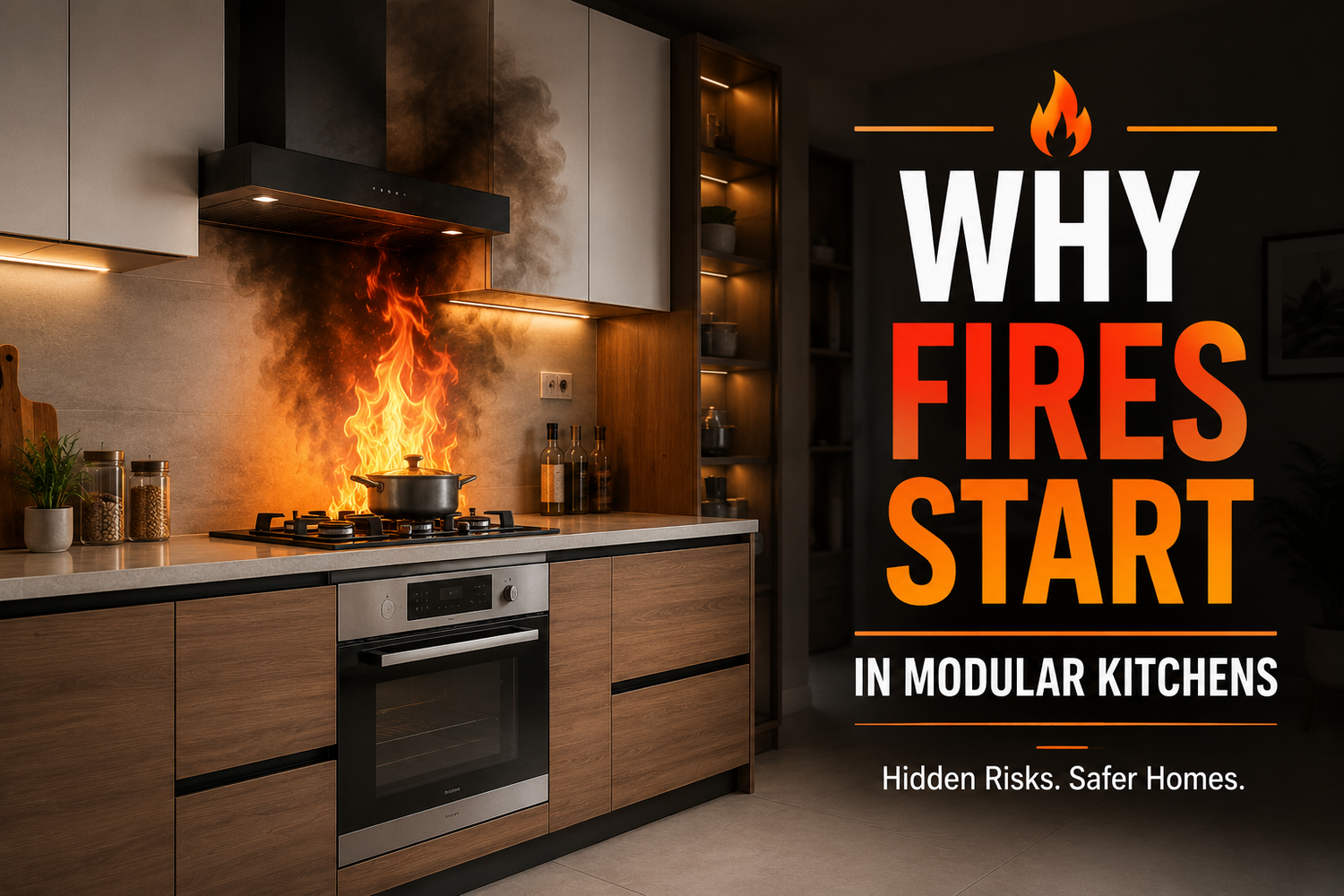
The modular kitchen has become the heart of modern Indian homes. With sleek cabinets, built-in appliances, elegant laminates, and optimized storage, it combines functionality with style. However, behind these beautiful designs lies a hidden risk that many homeowners overlook—fire hazards.
Every year, thousands of residential fires originate in kitchens. While cooking accidents are often blamed, the real causes can be much deeper, involving electrical systems, poor material choices, and inadequate safety planning.
Understanding why fires start inside modular kitchens can help homeowners, interior designers, architects, and contractors create safer living spaces.
Why Kitchens Are the Most Fire-Prone Area in a Home
Unlike bedrooms or living rooms, kitchens combine multiple fire risk factors in one place:
- Open flames
- High temperatures
- Electrical appliances
- Flammable materials
- Cooking oils
- Gas connections
When these elements interact, even a small mistake can quickly escalate into a major fire incident.
1. Electrical Short Circuits Inside Cabinets
One of the most common causes of kitchen fires is electrical failure.
Modern modular kitchens contain:
- Chimneys
- Microwaves
- Ovens
- Dishwashers
- Refrigerators
- Water purifiers
- Under-cabinet lighting
Improper wiring, overloaded circuits, loose connections, or poor-quality electrical components can generate heat and sparks.
Since much of this wiring remains hidden behind cabinets, problems often go unnoticed until a fire starts.
Common Warning Signs
- Burning smell
- Flickering lights
- Warm switchboards
- Tripping circuit breakers
- Sparking sockets
2. Heat Accumulation Around Cooking Zones
Gas stoves and cooktops generate significant heat.
When cabinet materials are installed too close to cooking areas, prolonged heat exposure can weaken surfaces and increase ignition risks.
Poor ventilation worsens the problem by trapping heat inside enclosed spaces.
Over time, excessive heat can:
- Damage cabinet cores
- Weaken adhesives
- Affect laminates
- Create ignition points
3. Grease Buildup Inside Chimneys
Grease is highly flammable.
Every time food is cooked, microscopic oil particles travel through the air and accumulate inside:
- Chimney filters
- Exhaust ducts
- Ventilation systems
Without regular cleaning, these grease deposits become fuel for fire.
A small spark or excessive heat can ignite accumulated grease, causing flames to spread rapidly through the kitchen.
Recommended Maintenance
- Clean filters monthly
- Service chimneys every 3–6 months
- Inspect exhaust ducts regularly
4. Gas Leakage Incidents
Gas leaks remain one of the most dangerous kitchen hazards.
Leaks can occur due to:
- Damaged pipes
- Loose regulators
- Faulty connections
- Aging rubber tubes
Even a tiny spark from an electrical switch can ignite leaked gas.
Safety Tips
- Install gas leak detectors
- Check connections regularly
- Replace old pipes and tubes
- Ensure proper ventilation
5. Highly Flammable Interior Materials
Many homeowners focus on appearance but ignore material safety.
Traditional plywood, particle board, and low-quality engineered wood products can ignite quickly when exposed to high temperatures.
When fire reaches these materials, flames spread rapidly through cabinets and storage units.
This is why material selection plays a critical role in kitchen safety.
6. Storage of Flammable Items
Many kitchens contain combustible products such as:
- Cooking oils
- Aerosol sprays
- Cleaning chemicals
- Paper towels
- Plastic containers
Improper storage near heat sources significantly increases fire risks.
A single spark can ignite nearby materials and intensify the fire.
7. Human Error During Cooking
Many kitchen fires still result from simple mistakes:
- Leaving cooking unattended
- Overheated oil
- Forgotten gas burners
- Electrical appliances left running
Cooking oil can reach ignition temperatures surprisingly fast.
Once oil catches fire, water should never be used to extinguish it, as it can spread flames instantly.
8. Poor Ventilation Design
A well-designed modular kitchen requires proper airflow.
Without adequate ventilation:
- Heat accumulates
- Smoke builds up
- Grease concentrations increase
These conditions create a more dangerous environment and raise the likelihood of fire-related incidents.
How Fire-Retardant Materials Improve Kitchen Safety
While no material is completely fireproof, fire-retardant plywood significantly slows the spread of flames.
Benefits include:
- Delayed ignition
- Reduced flame spread
- Lower smoke generation
- Additional evacuation time
- Better structural stability during fire exposure
For modular kitchens, fire-retardant plywood provides an important layer of protection beyond traditional materials.
Why More Homeowners Are Choosing Fire-Retardant Plywood
Modern homeowners increasingly prioritize safety alongside aesthetics.
Fire-retardant plywood is especially suitable for:
- Modular kitchens
- Utility areas
- Apartment interiors
- Commercial kitchens
- Hotels
- Restaurants
Products like Plyneer Club combine:
- Fire-retardant technology
- ISI 710 waterproof performance
- Termite resistance
- Premium calibrated construction
- Lifetime warranty
This helps homeowners achieve both durability and enhanced safety.
Fire Prevention Checklist for Modular Kitchens
✅ Install quality electrical wiring
✅ Use certified electrical components
✅ Clean chimney filters regularly
✅ Inspect gas connections frequently
✅ Maintain proper ventilation
✅ Avoid storing flammable items near heat
✅ Never leave cooking unattended
✅ Use fire-retardant materials
✅ Install smoke detectors
✅ Keep a fire extinguisher nearby
Conclusion
A modular kitchen is one of the most valuable spaces in a home, but it is also one of the most vulnerable to fire hazards. Electrical faults, grease buildup, gas leaks, poor ventilation, and combustible materials can all contribute to devastating kitchen fires.
By understanding these risks and choosing safer materials, homeowners can significantly reduce the chances of a fire incident. Investing in fire-retardant, waterproof, and durable materials is not just about protecting furniture—it is about protecting families, homes, and peace of mind.


