

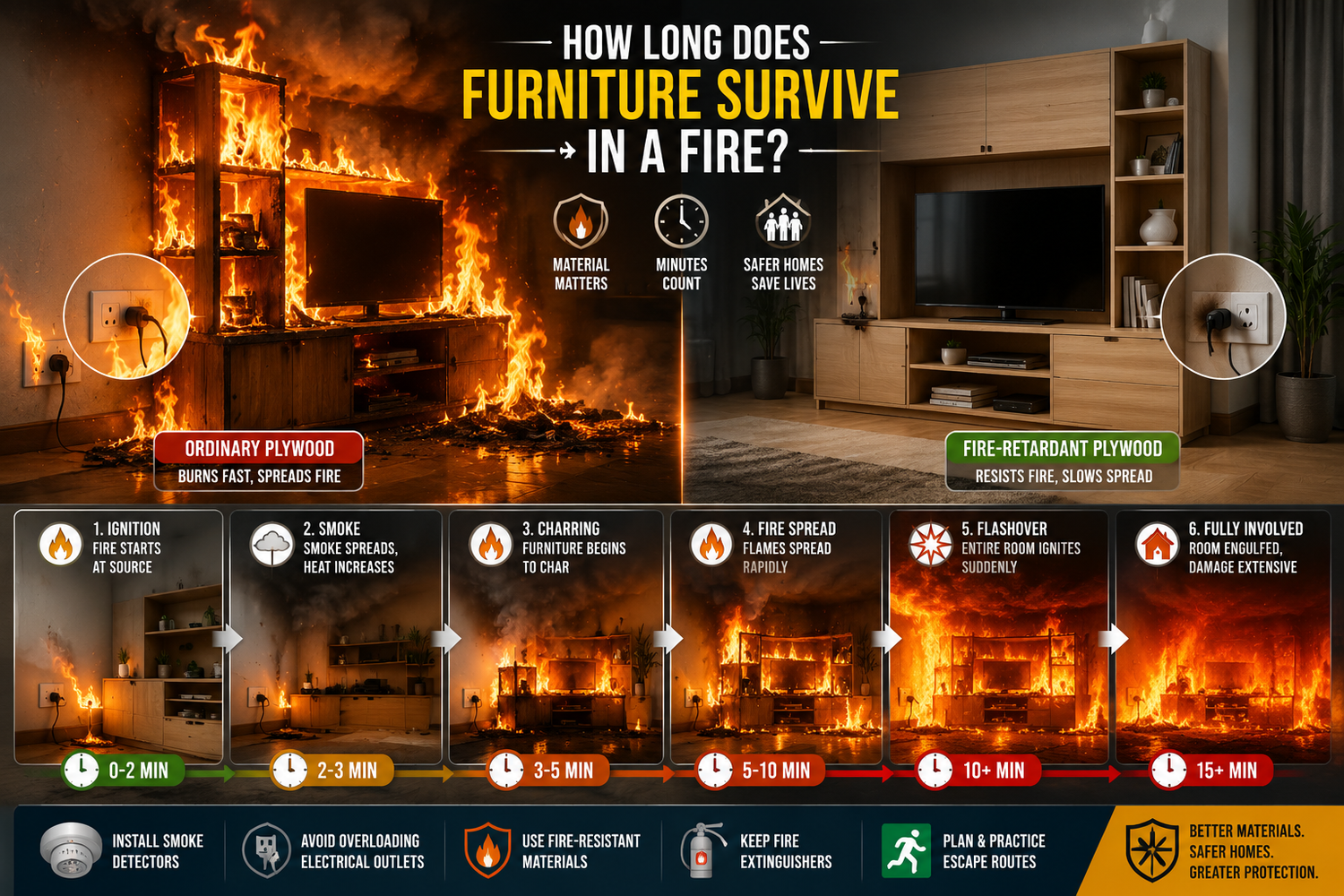
A house fire can transform from a small spark into a devastating blaze within minutes. While many homeowners focus on electrical systems, smoke alarms, and fire extinguishers, few realize that furniture itself often becomes one of the biggest contributors to fire growth.
So, how long does furniture survive during a house fire?
The answer depends on several factors, including the type of material used, furniture construction, fire intensity, oxygen supply, and room conditions. In many cases, ordinary wooden furniture can begin igniting within minutes of direct flame exposure, while engineered fire-resistant materials can significantly delay fire spread.
Understanding how furniture behaves during a fire is critical for homeowners, architects, interior designers, contractors, and carpenters who want to create safer living spaces.
In this guide, we'll explore what happens to furniture during a house fire, how different materials perform, and why fire-retardant plywood is becoming an increasingly important choice for modern interiors.
Understanding What Happens During a House Fire
A typical house fire develops in stages:
1. Ignition Stage
A fire begins from a source such as:
- Electrical short circuits
- Overloaded sockets
- Gas leaks
- Faulty appliances
- Candles
- Cooking accidents
At this stage, temperatures may be relatively low but can rise rapidly.
2. Growth Stage
Once nearby combustible materials ignite, the fire expands.
Furniture becomes fuel.
Wood, laminates, adhesives, foam cushions, fabrics, and stored household items all contribute to flame growth.
3. Flashover
Flashover is one of the most dangerous phases.
This occurs when nearly every combustible surface in a room ignites simultaneously.
Temperatures can exceed:
- 500°C
- 700°C
- Sometimes over 1,000°C
After flashover, furniture survival becomes extremely unlikely.
4. Fully Developed Fire
At this stage:
- Furniture is heavily damaged
- Structural elements begin failing
- Smoke becomes highly toxic
5. Decay Stage
The fire reduces as fuel or oxygen becomes limited.
How Quickly Does Wooden Furniture Catch Fire?
The question "How Long Does Furniture Survive During a House Fire?" largely depends on the furniture material.
Ordinary wooden furniture can begin charring within minutes.
Typical progression:
| Time | What Happens |
|---|---|
| 0–2 Minutes | Surface heating begins |
| 2–5 Minutes | Smoke generation increases |
| 5–10 Minutes | Charring and ignition may begin |
| 10–20 Minutes | Structural weakening occurs |
| 20+ Minutes | Severe damage or collapse possible |
Furniture placed near the ignition source may ignite much faster.
Furniture located further away may survive longer but can still be destroyed during flashover.
Factors That Affect Furniture Survival Time
Material Used in Furniture
Material selection is the single biggest factor influencing furniture survival.
Solid Wood
Advantages:
- Thick sections char slowly
- Some structural integrity remains during initial fire stages
Disadvantages:
- Eventually burns
- Produces fuel for fire spread
Ordinary Plywood
Advantages:
- Strong and economical
Disadvantages:
- Adhesives and veneers can accelerate burning
- May delaminate under high heat
MDF
Advantages:
- Smooth finish
Disadvantages:
- Generally performs poorly under fire exposure
- Can release significant smoke
Particle Board
Advantages:
- Affordable
Disadvantages:
- Rapid deterioration during fire
Fire-Retardant Plywood
Advantages:
- Slows flame spread
- Delays ignition
- Provides valuable evacuation time
This is why many commercial buildings and safety-conscious homes increasingly prefer fire-resistant plywood.
Fire Intensity and Temperature
The hotter the fire becomes, the shorter furniture survival time.
Approximate temperatures:
| Fire Stage | Temperature |
|---|---|
| Initial Fire | 200°C–400°C |
| Growing Fire | 400°C–600°C |
| Flashover | 600°C–800°C+ |
| Fully Developed | 800°C–1,000°C+ |
Higher temperatures rapidly degrade furniture materials.
Ventilation and Oxygen Supply
Fire needs oxygen.
Rooms with:
- Open windows
- Open doors
- Air vents
can experience much faster fire growth.
More oxygen means:
- Faster ignition
- Higher temperatures
- Reduced furniture survival time
Furniture Thickness and Construction Quality
High-quality furniture generally survives longer because:
- Thicker panels absorb more heat
- Better bonding reduces early failure
- Dense core construction slows burn progression
Poor-quality furniture often fails rapidly due to:
- Core gaps
- Inferior adhesives
- Thin veneers
Why Ordinary Furniture Can Accelerate Fire Spread
Many homeowners assume furniture is only a victim of fire.
In reality, furniture often becomes the fuel source.
Common combustible components include:
- Wood
- Decorative laminates
- Adhesives
- Polyurethane foam
- Fabrics
- PVC edge bands
When these materials ignite:
- Heat release increases
- Flames spread faster
- Smoke production rises
- Escape time decreases
This is one reason modern home fires often spread faster than older fires.
The Role of Fire-Retardant Plywood in Furniture Safety
Fire-retardant plywood is specifically designed to resist ignition and slow flame spread.
Unlike ordinary plywood, it undergoes treatment with fire-retardant chemicals that help reduce combustion.
Benefits include:
Delayed Ignition
Requires more heat before catching fire.
Reduced Flame Spread
Slows the movement of fire across furniture surfaces.
Lower Heat Release
Helps prevent rapid fire growth.
More Evacuation Time
Provides occupants with additional time to exit safely.
Better Property Protection
Can reduce overall damage in certain fire situations.
For homeowners seeking improved furniture fire safety, fire-retardant plywood offers a practical layer of protection.
Products such as Plyneer Club Fire-Retardant Plywood are designed to combine:
- Fire resistance
- Waterproof performance
- Long-term durability
making them suitable for kitchens, wardrobes, TV units, and other interior applications.
Ordinary Plywood vs Fire-Retardant Plywood
| Feature | Ordinary Plywood | Fire-Retardant Plywood |
|---|---|---|
| Ignition Resistance | Low | High |
| Flame Spread | Faster | Slower |
| Smoke Generation | Higher | Lower |
| Evacuation Time | Less | More |
| Fire Safety | Basic | Enhanced |
| Suitable for High-Risk Areas | Limited | Recommended |
| Long-Term Safety | Moderate | Better |
Common Areas Where Furniture Fires Begin
Modular Kitchens
Kitchens are among the highest-risk areas.
Common causes:
- Gas leaks
- Electrical appliances
- Heat-producing equipment
- Grease accumulation
Read also:
- Hidden Fire Risks in Wooden Furniture
- Why Fires Start Inside Modular Kitchens
TV Units
TV units often conceal:
- Power strips
- Chargers
- Wi-Fi routers
- Set-top boxes
Heat buildup and faulty wiring can create ignition sources.
Wardrobes
Wardrobes may contain:
- Lighting fixtures
- Electrical accessories
- Flammable fabrics
Poor ventilation can increase risk.
Bedrooms
Common fire sources include:
- Charging devices
- Extension boards
- Electric blankets
- Faulty wiring
Furniture close to these ignition points is especially vulnerable.
How Homeowners Can Improve Furniture Fire Safety
Practical steps include:
Install Smoke Alarms
Early detection saves lives.
Avoid Overloaded Electrical Sockets
Many fires begin with overloaded circuits.
Maintain Wiring
Schedule periodic inspections.
Keep Heat Sources Away from Furniture
Maintain safe distances from:
- Heaters
- Stoves
- Candles
Use Fire-Retardant Materials
Choose safer interior products where possible.
Follow Building Safety Standards
Work with qualified architects and contractors.
Create an Emergency Plan
Every family should know evacuation routes.
Choosing Safer Materials for Modern Homes
When selecting furniture materials, homeowners should look beyond appearance and price.
Consider:
Fire Performance
How does the material react during a fire?
Durability
Can it withstand years of use?
Moisture Resistance
Especially important for kitchens and bathrooms.
Indoor Air Quality
Choose low-emission products.
Certification and Standards
Verify compliance with relevant safety standards.
A balanced approach to furniture selection should prioritize:
- Safety
- Strength
- Longevity
- Sustainability
rather than focusing solely on aesthetics.
Key Takeaways
✓ Furniture often becomes fuel during a house fire.
✓ Ordinary furniture can begin burning within minutes of direct flame exposure.
✓ Flashover can occur in under 10 minutes under certain conditions.
✓ Material choice significantly affects furniture survival time.
✓ Fire-retardant plywood can delay ignition and slow flame spread.
✓ Kitchens, TV units, wardrobes, and bedrooms are common fire-risk areas.
✓ Safer materials can provide valuable evacuation time and reduce property damage.
✓ Fire safety should be considered during furniture design, not after installation.
Quick Summary
- House fires can spread rapidly once furniture ignites.
- Ordinary plywood and engineered wood products generally burn faster than fire-retardant alternatives.
- Furniture survival depends on temperature, oxygen supply, material quality, and construction.
- Fire-retardant plywood improves fire performance and can help slow flame spread.
- Smart material selection plays a crucial role in modern home fire protection.
Conclusion
So, how long does furniture survive during a house fire?
The reality is that most ordinary furniture can begin suffering serious damage within minutes of fire exposure. Once a fire reaches flashover conditions, survival chances for furniture drop dramatically. However, the materials chosen during construction and interior design can make a meaningful difference.
By selecting fire-resistant furniture materials, maintaining electrical safety, and incorporating fire-retardant plywood into critical areas such as modular kitchens, wardrobes, and TV units, homeowners can improve overall home fire protection. While no furniture material is completely fireproof, products designed for enhanced fire performance can help slow fire spread, increase evacuation time, and contribute to a safer living environment.
For anyone building or renovating a home, fire safety should be considered as important as aesthetics, durability, and cost.
FAQs
1. How long does wooden furniture survive in a house fire?
Wooden furniture may begin charring within minutes and can suffer major structural damage within 10–20 minutes depending on fire intensity.
2. Does plywood burn quickly?
Ordinary plywood can ignite relatively quickly when exposed to sufficient heat and flame.
3. What is fire-retardant plywood?
Fire-retardant plywood is specially treated to reduce flame spread and delay ignition.
4. Can fire-retardant plywood stop a fire?
No. It does not stop a fire completely but helps slow its spread.
5. Which furniture materials are safest during a fire?
Fire-retardant plywood and certified fire-resistant materials generally perform better than standard engineered wood products.
6. Is fire-retardant plywood worth the investment?
For high-risk areas like kitchens and TV units, many homeowners consider it a valuable safety upgrade.
7. What room experiences the highest furniture fire risk?
Modular kitchens typically face the highest risk due to heat sources and cooking appliances.
8. Can thick furniture survive longer during a fire?
Yes. Thicker materials often char more slowly and maintain structural strength longer.
9. Why do modern home fires spread so quickly?
Modern interiors contain more synthetic materials, adhesives, and engineered products that contribute fuel.
10. Is waterproof plywood also fire resistant?
No. Waterproof and fire-retardant properties are different. Some premium products combine both features.
Image ALT Texts
- Fire-retardant plywood furniture surviving house fire conditions in modern home interior
- Comparison of ordinary plywood and fire-resistant plywood during fire exposure
- Modular kitchen furniture fire safety with fire-retardant plywood cabinets
- House fire furniture damage showing wooden cabinet burn progression
- Fire-resistant furniture materials used in modern residential interiors
Blog Tags
- House Fire Safety
- Fire Retardant Plywood
- Furniture Fire Safety
- Fire Resistant Furniture
- Home Fire Protection
- Wooden Furniture Fire Risk
- Modular Kitchen Safety
- Interior Safety
- Fire Resistant Plywood
- Furniture Materials
- House Fire Damage
- Plywood Safety
- Modern Interiors
- Home Renovation
- Plyneer Club
Keywords Used
Primary Keyword
- How Long Does Furniture Survive During a House Fire
Secondary Keywords
- house fire furniture damage
- furniture fire safety
- fire retardant plywood
- fire resistant furniture materials
- wooden furniture fire risk
- fire resistant plywood
- modular furniture fire safety
- home fire protection
- fire safety in interiors
- fire resistant furniture
Social Media Caption
🔥 How long would your furniture survive in a house fire?
Most homeowners never think about it until it's too late.
Discover how fires spread through furniture, why ordinary plywood can accelerate damage, and how fire-retardant plywood can improve home safety.
Read now and make safer choices for your interiors.
#FireSafety #PlyneerClub #FireRetardantPlywood #HomeSafety #Plywood #ModularKitchen #InteriorDesign #FurnitureSafety
WhatsApp Share Text
🔥 How Long Does Furniture Survive During a House Fire?
Most furniture can begin suffering serious damage within minutes during a fire. Learn what affects survival time, why fire-retardant plywood matters, and how to improve furniture fire safety in your home.
📖 Read the complete guide and make safer interior choices today.
#HomeSafety #FireSafety #PlyneerClub #FireRetardantPlywood
Meta Title
How Long Does Furniture Survive During a House Fire? Fire Safety Guide
Meta Description
Learn how long furniture survives during a house fire, what affects burn time, and how fire-retardant plywood improves home safety.
Suggested URL
https://plyneer.com/blogs/news/how-long-does-furniture-survive-during-a-house-fire
How Long Does Furniture Survive During a House Fire?
When a house fire breaks out, every second matters. While smoke alarms, extinguishers, and emergency exits are critical, one often-overlooked factor is the furniture inside your home. Furniture can either slow down a fire or fuel it, depending on the materials used.
So, how long does furniture survive during a house fire?
The answer depends on several factors, including the type of furniture, materials used, fire intensity, oxygen supply, and overall room conditions. In many cases, ordinary wooden furniture can begin to char or ignite within minutes of direct flame exposure. On the other hand, furniture made using fire-retardant materials may resist ignition longer and slow the spread of flames.
Understanding how furniture behaves during a fire can help homeowners, architects, interior designers, contractors, and carpenters make safer choices when designing interiors.
Understanding What Happens During a House Fire
A house fire does not instantly engulf a room. It develops in stages, and furniture plays a major role in determining how quickly the fire spreads.
Ignition Stage
A fire often starts from:
- Faulty electrical wiring
- Overloaded power sockets
- Gas leaks
- Cooking accidents
- Candles
- Heating appliances
Initially, temperatures remain localized around the source.
Growth Stage
As nearby materials begin to heat up, combustible items such as furniture, curtains, and wooden cabinets start contributing fuel to the fire.
Flashover
Flashover is the point where nearly everything combustible in a room ignites simultaneously.
This can occur within minutes under the right conditions.
Room temperatures during flashover can exceed:
- 600°C
- 800°C
- Even 1,000°C in severe fires
Once flashover occurs, furniture survival becomes extremely unlikely.
Fully Developed Fire
The fire consumes available fuel and reaches peak intensity.
At this stage:
- Furniture structures collapse
- Smoke production increases
- Property damage becomes extensive
How Quickly Does Wooden Furniture Catch Fire?
The question "How Long Does Furniture Survive During a House Fire?" largely depends on the furniture material.
Wood itself does not instantly burst into flames. Before ignition, it undergoes a process called pyrolysis, where heat breaks down the material and releases combustible gases.
Typical timeline:
| Fire Exposure Time | Furniture Condition |
|---|---|
| 0–2 Minutes | Surface heating begins |
| 2–5 Minutes | Smoke and charring appear |
| 5–10 Minutes | Ignition may occur |
| 10–20 Minutes | Structural weakening starts |
| 20+ Minutes | Severe damage or collapse |
Furniture located near the fire source will ignite much faster than furniture positioned elsewhere in the room.
Factors That Affect Furniture Survival Time
Material Used in Furniture
Different furniture materials react differently to fire.
Solid Wood
Advantages:
- Chars gradually
- Retains some structural strength initially
Disadvantages:
- Eventually burns and contributes fuel
Ordinary Plywood
Advantages:
- Affordable
- Strong and versatile
Disadvantages:
- Adhesives and veneers may accelerate burning
- Can delaminate under intense heat
MDF
Advantages:
- Smooth finish
- Popular for interiors
Disadvantages:
- Produces significant smoke
- Can deteriorate quickly during a fire
Particle Board
Advantages:
- Cost-effective
Disadvantages:
- Lower fire resistance
- Rapid structural failure under heat
Fire-Retardant Plywood
Advantages:
- Delays ignition
- Slows flame spread
- Improves evacuation time
This makes fire-retardant plywood a preferred choice for safety-conscious interiors.
Fire Intensity and Temperature
The hotter the fire, the shorter the furniture survival time.
| Fire Stage | Temperature Range |
|---|---|
| Early Fire | 200°C–400°C |
| Growth Stage | 400°C–600°C |
| Flashover | 600°C–800°C+ |
| Fully Developed Fire | 800°C–1,000°C+ |
Higher temperatures accelerate burning and structural damage.
Ventilation and Oxygen Supply
Fire requires oxygen to grow.
Factors that increase oxygen supply include:
- Open windows
- Open doors
- Ventilation ducts
- Air-conditioning systems
More oxygen generally means:
- Faster fire growth
- Higher temperatures
- Reduced furniture survival time
Furniture Thickness and Construction Quality
High-quality furniture often survives longer because:
- Thicker panels absorb more heat
- Better adhesives maintain integrity longer
- Dense core construction slows burn progression
Poor-quality furniture may fail rapidly due to:
- Core gaps
- Inferior bonding
- Thin veneers
Why Ordinary Furniture Can Accelerate Fire Spread
Many people assume furniture is simply damaged by fire.
In reality, furniture often becomes fuel.
Common combustible components include:
- Wood
- Laminates
- Foam cushions
- Fabrics
- Adhesives
- Edge bands
Once these materials ignite:
- Flames spread faster
- Heat levels increase
- Smoke production rises
- Escape time decreases
Modern furniture often contains engineered materials and synthetic components that can contribute significantly to fire growth.
Ordinary Plywood vs Fire-Retardant Plywood
| Feature | Ordinary Plywood | Fire-Retardant Plywood |
|---|---|---|
| Ignition Resistance | Low | High |
| Flame Spread | Faster | Slower |
| Smoke Production | Higher | Lower |
| Heat Release | Higher | Reduced |
| Safety Performance | Standard | Enhanced |
| Suitable for High-Risk Areas | Limited | Recommended |
The Role of Fire-Retardant Plywood in Furniture Safety
Fire-retardant plywood is designed to slow the spread of flames and resist ignition for a longer period than ordinary plywood.
Benefits include:
Delayed Ignition
Requires more heat before catching fire.
Reduced Flame Spread
Slows the movement of fire across furniture surfaces.
More Evacuation Time
Provides valuable additional minutes for occupants.
Improved Property Protection
Can help reduce the severity of fire damage.
Better Interior Safety
Particularly useful in:
- Modular kitchens
- TV units
- Wardrobes
- Office furniture
- Commercial interiors
Products such as Plyneer Club Fire-Retardant Plywood combine fire resistance with waterproof protection and long-term durability, making them suitable for modern homes where safety is a priority.
Common Areas Where Furniture Fires Begin
Modular Kitchens
Kitchens are among the highest-risk zones in any home.
Common causes include:
- Gas leaks
- Faulty appliances
- Overheated wiring
- Grease accumulation
TV Units
TV units often conceal:
- Power strips
- Routers
- Chargers
- Entertainment systems
Electrical faults in these areas can quickly ignite nearby furniture.
Wardrobes
Wardrobes may contain:
- Electrical lighting
- Chargers
- Flammable clothing and fabrics
Poor ventilation can worsen fire conditions.
Bedrooms
Common fire sources include:
- Mobile chargers
- Extension boards
- Electrical blankets
- Faulty switches
Furniture located near these ignition sources faces increased risk.
How Homeowners Can Improve Furniture Fire Safety
Install Smoke Detectors
Early warning saves lives.
Avoid Overloading Sockets
Many residential fires start due to electrical overload.
Maintain Electrical Wiring
Schedule periodic inspections.
Keep Heat Sources Away
Avoid placing furniture near:
- Heaters
- Gas stoves
- Candles
Use Fire-Resistant Materials
Choose safer furniture materials wherever possible.
Follow Building Safety Standards
Work with qualified professionals and use certified products.
Create a Fire Escape Plan
Every family should know how to evacuate safely.
Choosing Safer Materials for Modern Homes
When selecting furniture materials, consider more than appearance.
Look for:
Fire Resistance
How well does the material resist ignition?
Durability
Can it withstand long-term use?
Moisture Protection
Especially important for kitchens and bathrooms.
Indoor Air Quality
Low-emission materials contribute to healthier living spaces.
Compliance with Standards
Choose products that meet recognized quality and safety standards.
Key Takeaways
✔ Furniture can become a major fuel source during a house fire.
✔ Wooden furniture may begin charring within minutes of exposure.
✔ Flashover can occur rapidly and drastically reduce survival time.
✔ Material choice significantly affects fire performance.
✔ Fire-retardant plywood can delay ignition and slow flame spread.
✔ Kitchens, TV units, wardrobes, and bedrooms are common fire-risk areas.
✔ Safer furniture materials can provide valuable evacuation time.
✔ Fire safety should be considered during the design stage—not after installation.
Conclusion
So, how long does furniture survive during a house fire?
Most furniture begins experiencing damage within minutes of direct fire exposure. Once a fire reaches flashover conditions, survival chances for furniture decrease dramatically. However, choosing the right materials can make a significant difference.
Fire-resistant furniture materials, especially fire-retardant plywood, can help slow flame spread, delay ignition, and provide occupants with valuable extra time during an emergency. While no furniture material is completely fireproof, making informed choices can improve home safety and reduce the impact of fire-related damage.
When designing a new home or renovating an existing one, fire safety should be considered alongside aesthetics, durability, and cost.


