

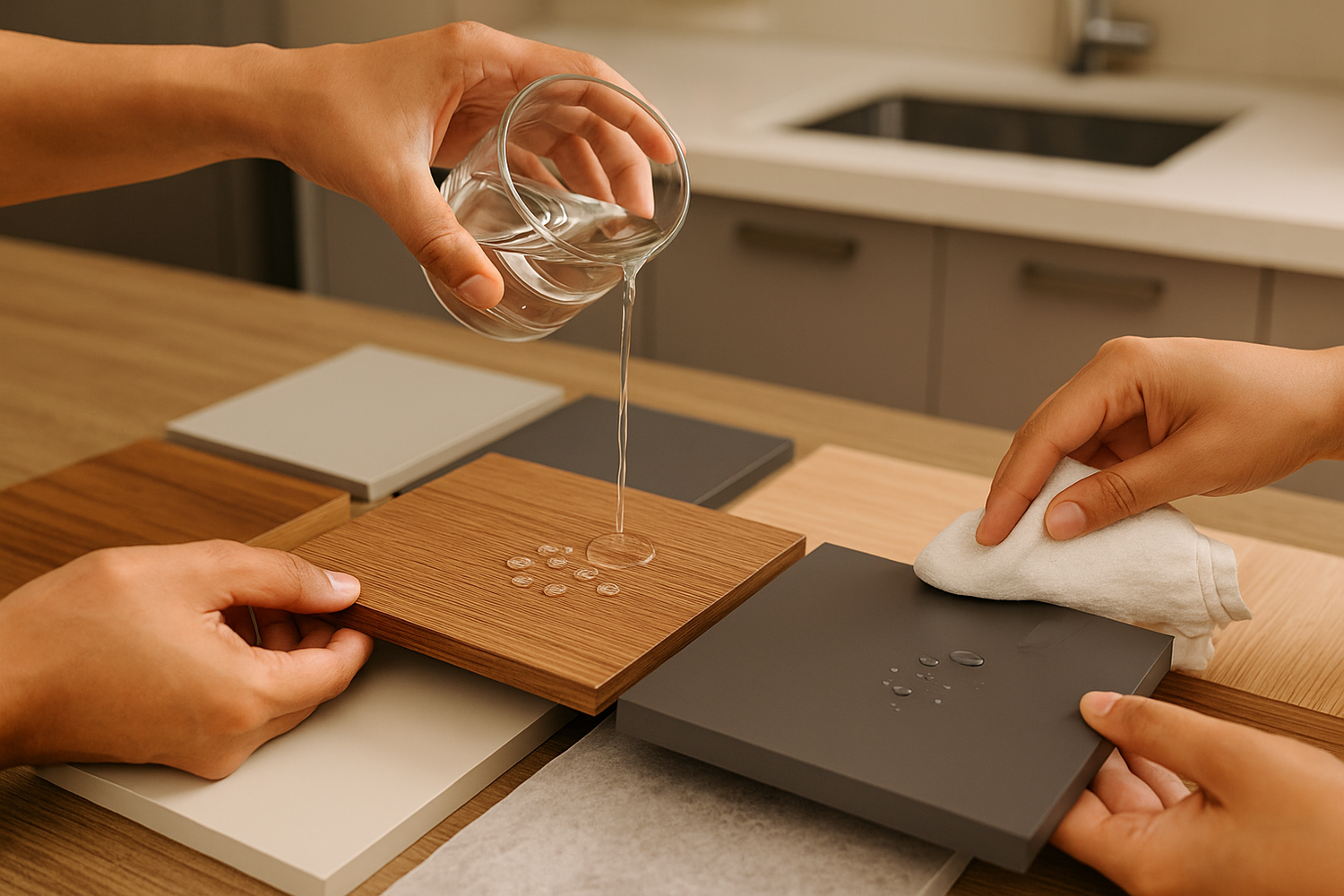
When choosing materials for kitchens, wardrobes, or bathroom interiors, one of the most common questions homeowners ask is:
“Are laminates waterproof?”
The short answer:
👉 Most laminates are water-resistant, not completely waterproof.
But there is more to understand—because the performance varies depending on quality, thickness, application, and how well the base material (plywood/MDF) is protected.
Let’s break it down clearly.
1. What Exactly Are Laminates Made Of?
Laminates are multi-layered sheets created by pressing together:
- Decorative paper (top layer)
- Kraft paper (core layers)
- Melamine resin & protective coating
These layers are bonded under high heat and pressure, creating a surface that is:
✔ Hard
✔ Durable
✔ Resistant to stains
✔ Resistant to minor moisture exposure
But this does not make them fully waterproof.
2. Are Laminates Waterproof or Water-Resistant?
⭐ Water-Resistant (Yes)
Laminates can resist:
- Accidental spills
- Surface moisture
- Mild steam exposure
- Cleaning with wet cloth
❌ Waterproof (No)
Laminates are not designed to stay submerged in water or face continuous moisture.
If water seeps into:
- Edges,
- Joints, or
- Improperly sealed surfaces,
- The underlying plywood/MDF can get damaged.
3. What Damages Laminates in Moisture-Prone Areas?
Common reasons why laminates fail in kitchens or bathrooms:
- 🧩 Poor edge banding
- 🆘 Wrong adhesive used
- 💧 Water seeping into gaps
- 🚿 Using MDF where plywood is required
- 🔥 Steam from cooking without hood clearance
In short: The laminate surface is safe, but the core material must be protected.
4. Which Laminates Are Better for Moisture?
✔ High-Pressure Laminates (HPL)
Best for:
- Kitchens
- Wardrobes
- Commercial interiors
Because they are denser and more durable.
✔ PVC / Acrylic Laminates
Better moisture resistance than standard laminates.
✔ Anti-Fingerprint Matt Laminates
More resistant to stains and moisture.
✔ Exterior-Grade Laminates
Designed for outdoor use and can withstand higher humidity.
5. Best Base Materials for Laminate Application
A laminate is only as good as the board underneath.
Best Choices:
- BWP Plywood (Boiling Waterproof – ideal for kitchens & bathrooms)
- HDiHMR (High-Density, High Moisture-Resistant board)
- BWR Plywood (Boiling Water-Resistant – good for moderate moisture)
Avoid:
- MDF or Particle Board in damp areas
- Cheap plywood with mixed cores
6. Where Laminates Work Best (Moisture Considered)
✔ Safe for High Moisture:
- Kitchen overhead cabinets
- TV units
- Wardrobes
- Study units
- Office furniture
⚠️ Use With Caution:
- Kitchen base cabinets
- Bathroom vanities
- Sink-side units
(Always use BWP plywood + proper sealing)
❌ Not Recommended:
- Directly inside wet bathrooms
- Areas exposed to water flow
- Outdoor spaces
7. How to Make Laminates Last Longer in Moisture
- Proper PVC edge banding
- Use PU coating on exposed edges
- Maintain good ventilation
- Install chimney/hood in kitchens
- Avoid soaking the area during cleaning
- Wipe spills immediately
- With good installation and a good choice of board, laminates can last 10+ years even in humid spaces.
8. Plyneer’s Recommendation
At Plyneer, we advise customers:
“Laminates are water-resistant, but the plywood you choose decides the life.”
For best results:
- Use Plyneer X BWP for kitchens & bathrooms
- Use Plyneer Silver BWR for moderate moisture
- Use Plyneer HDiHMR/MDF for wardrobes & dry areas
- Combine with our premium laminate collection for stunning interiors
Conclusion
Laminates are one of the best finishing materials for modern interiors—but understanding the difference between water-resistant and waterproof helps you avoid costly mistakes.
When used with the right plywood and proper installation, laminates can handle everyday moisture extremely well and stay beautiful for years.


