

What Is “Marine Ply”?
Before comparing, let’s clarify what “marine plywood” means in the Indian context (and globally):
- Marine plywood generally implies plywood made with high‑quality hardwood veneers, no core voids, waterproof exterior adhesives (typically phenolic resins), and suitable for environments with continuous or frequent water exposure.
- In India, marine ply is typically equated with BWP (Boiling Water Proof) plywood that satisfies the IS:710 standard.
Key Comparison Parameters
Here are the main parameters by which Plyneer Club should be compared against “marine ply”:
| Parameter | Marine Ply (Typical) | Plyneer Club |
|---|---|---|
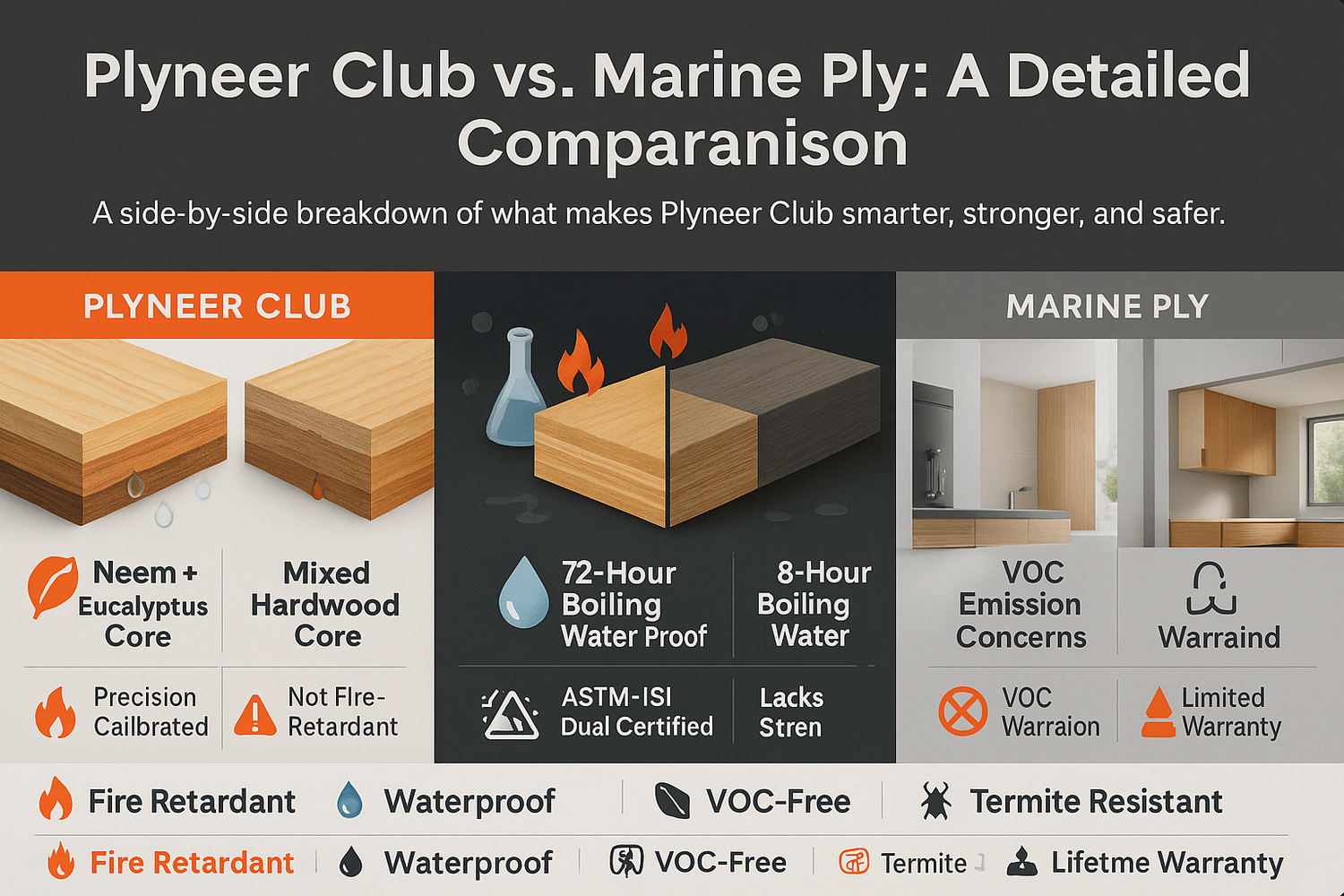
| Waterproofing / Boiling Water Resistance | Designed to endure water, sometimes continuous exposure (depending on grade); should resist boiling water tests if it's BWP / marine grade. | Equivalent or better. Plyneer Club is ISI:710‑grade or claimed to be full marine / boiling waterproof. (You’d highlight your 72 hrs + performance, no delamination, etc.) |
| Fire Retardancy | Standard marine plywood usually does not come fire retardant unless specially treated. Marine ply’s core technology is mostly focused on waterproofing. | Advantage: Plyneer Club includes fire‑retardant treatment (if your product claims it), meeting IS:5509 or similar norms. So this is a point of differentiation. |
| Core Quality / Hardwood / Void‑Free | Good marine ply has high quality veneers, void‑free core, good bonding. But in many “marine ply” marketed products there may still be lower quality veneers, small voids, less consistent resin treatment. | Plyneer Club should have calibrated hardwood (eucalyptus or whatever core you use), tight bonding, void‑free core, consistent quality control. This will help in strength, resistance to warping, edge stability. |
| Termite / Fungus Resistance | Many marine ply varieties include anti‑fungal / anti‑termite treatments (especially those meant for marine or outdoor exposure). | Plyneer Club claims similar or superior treatments (Termi‑block etc.), meaning better long‑term durability especially in humid or coastal zones. |
| Fire Safety / Certifications | Marine ply may not come with fire retardant certification unless specially treated. Buyers often need to pay more. | Plyneer Club includes fire safety certification (if applicable) making it safer for indoor applications where fire risk is present: kitchens, false ceilings, etc. |
| Finish & Surface Smoothness | Marine ply often has a high standard finish, since its visibility and practicality matter in boat/boat interiors or coastal constructions. But finish quality can vary. | Plyneer Club offers high finish compatibility (laminate, veneer, PU, etc.), better calibration so finishes adhere well, less sanding required, fewer defects. |
| Cost / Value / Warranty | Marine ply is typically more expensive than standard plywood because of higher quality, better adhesive, core, etc. Warranty varies. | Plyneer Club positions itself as a better value: matching or surpassing marine ply performance, but with additional benefits (fire safety, warranty, etc.), potentially saving long term costs (less maintenance, replacements). |
Which One Should Be Chosen When?
Here are some use‑cases to help decide which is more appropriate, and how Plyneer Club might be superior in many of them:
| Application | Marine Ply Adequate If… | Plyneer Club Is Better If… |
|---|---|---|
| Boat interior / dock / ship flooring / submerged wood | You need continuous exposure to water or saltwater and extreme moisture conditions. Go for top marine ply (truly BWP + marine spec). | If you need that and also want fire safety, longer life, less maintenance, Plyneer Club may give you that edge. |
| Kitchen cabinets / under‑sink units | If the marine ply is genuine and waterproof, it should do the job. | Plyneer Club could be better since it may provide waterproof + fire retardant + warranty + better surface finish. |
| Bathroom vanities / steam rooms | Marine ply is often chosen. But only if it’s verified and properly installed. | Plyneer Club with ISI:710 certification etc. would likely give you less issues, better longevity, less swelling/delamination. |
| Outdoor / garden structures | Marine ply may resist outdoor moisture, but UV, weather, and mechanical wear still matter. | Plyneer Club might be superior if treated for both moisture and surface finishes that withstand weather; plus termite protection. |
| High humidity / monsoon / coastal areas | Marine ply helps. But variations in quality, core, adhesives, treatments may cause failure if poor quality. | Plyneer Club’s consistent manufacturing and added treatments make better sense. Particularly if you want less maintenance and longer warranty. |
What Buyers Should Check
To make sure you get the right plywood (whether marine or Plyneer Club), check:
- Certification: ISI:710 (for marine grade / boiling waterproof), IS:5509 if fire safety is added.
- Glue / Resin Type: Phenol Formaldehyde (PF) is needed for marine/BWP; cheap resins degrade with moisture.
- Core Quality: Hardwood core, void‑free, calibration, smooth faces.
- Warranty & After‑Sales: Does the manufacturer back up with warranty for water damage, delamination, termite issues, fire?
- Real Test Proof / Lab Reports: Boiling water test results, fire retardant test, etc.
- Finish Suitability: How well does it take surface finishes you want (laminate, veneer, etc.)? Surface smoothness, sanding, etc.
Final Takeaway
- Marine plywood is a high standard of plywood aimed at heavy moisture exposure; if it’s genuine marine ply, it can perform very well.
- Plyneer Club aims to be not just marine‐grade, but also fireproof, premium in finish, consistent, and backed by warranty — offering more “insurance” and long‑term value.
If you’re buying for critical interior zones (kitchen, bathrooms, coastal home, etc.), Plyneer Club likely gives you more than ordinary marine ply — less maintenance, better safety, better finish, better peace of mind.


