

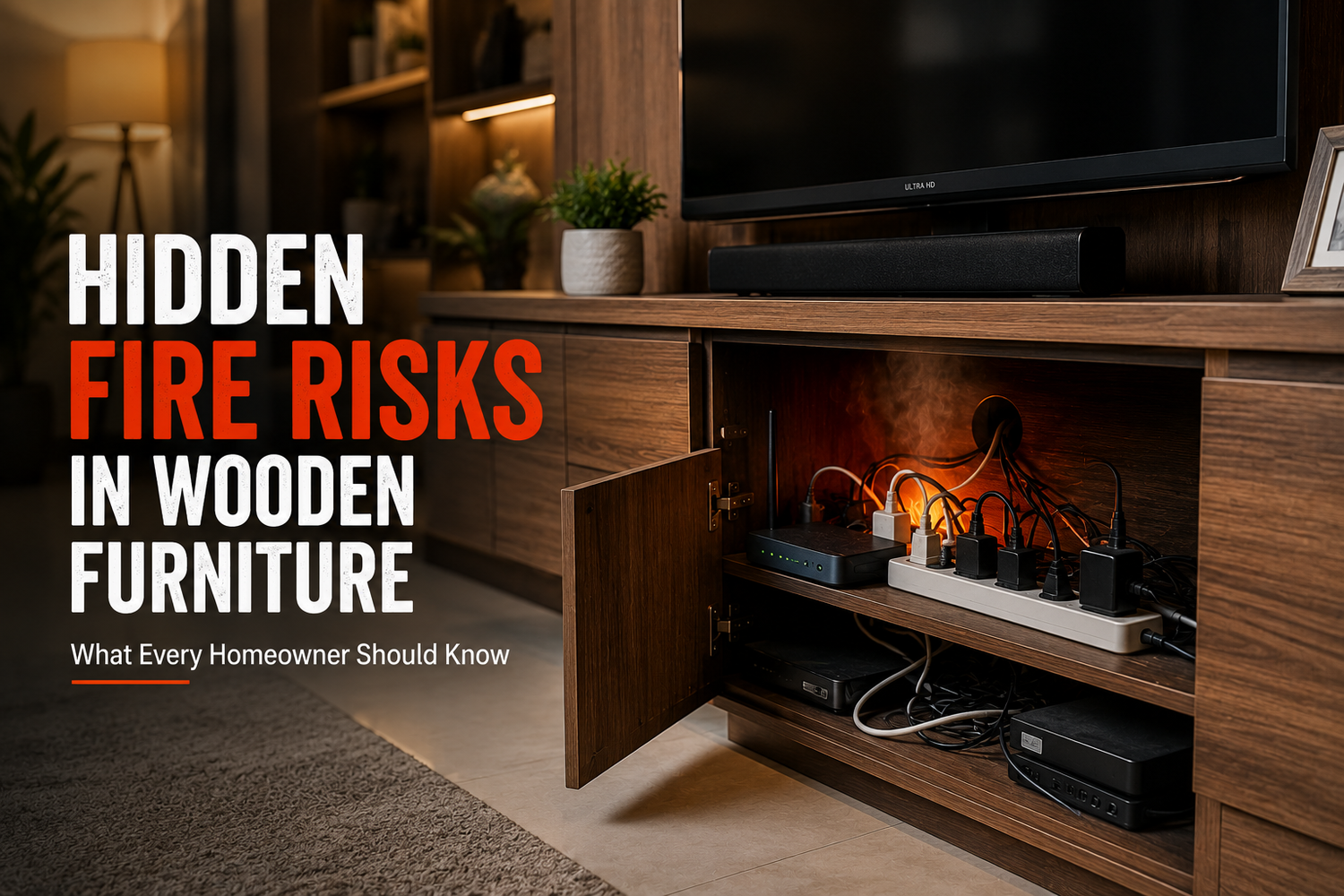
Wooden furniture is one of the most popular choices for modern homes, offices, hotels, and commercial spaces. From elegant wardrobes and modular kitchens to TV units, beds, and office workstations, wood-based furniture offers durability, functionality, and timeless aesthetics.
However, while homeowners often focus on design, durability, and finish, one critical factor is frequently overlooked—fire safety.
Many people assume that furniture-related fires only occur because of accidents involving open flames. In reality, several hidden factors can turn ordinary furniture into a fire hazard. Understanding these risks can help homeowners, interior designers, architects, and builders make safer material choices and create interiors that are both beautiful and secure.
Why Fire Safety in Furniture Matters
Modern homes contain more electrical devices and appliances than ever before.
Today's interiors commonly include:
- Smart TVs
- Wi-Fi routers
- Charging stations
- Decorative lighting
- Air conditioners
- Home automation systems
- Computers and workstations
Many of these devices generate heat and require electrical wiring that often runs behind or inside furniture units.
When combined with combustible materials, the risk of fire increases significantly.
Common Hidden Fire Risks in Wooden Furniture
1. Electrical Wiring Behind Furniture
One of the leading causes of furniture-related fires is faulty electrical wiring.
Furniture such as:
- TV units
- Entertainment centers
- Workstations
- Modular wardrobes
- Kitchen cabinets
often conceal electrical connections.
Problems can occur due to:
- Loose wiring
- Damaged insulation
- Overloaded power strips
- Poor-quality electrical accessories
A small spark can quickly ignite nearby materials and spread flames through furniture structures.
Prevention Tips
✔ Use certified electrical components
✔ Avoid overloading sockets
✔ Regularly inspect wiring
✔ Ensure proper ventilation around electrical devices
2. Heat Generated by Electronic Devices
Many homeowners place electronic equipment directly inside enclosed furniture compartments.
Common examples include:
- Wi-Fi routers
- Set-top boxes
- Gaming consoles
- UPS systems
- Audio amplifiers
These devices continuously generate heat.
When ventilation is inadequate, temperatures can rise significantly, creating a potential ignition source.
Prevention Tips
✔ Provide ventilation openings
✔ Avoid overcrowding compartments
✔ Follow manufacturer clearance recommendations
3. Poor-Quality Wood-Based Materials
Not all wood-based materials perform the same under fire conditions.
Low-quality boards may:
- Ignite faster
- Produce more smoke
- Spread flames rapidly
- Lose structural integrity quickly
Many inexpensive furniture materials prioritize cost over safety.
Investing in premium-quality plywood and engineered boards can significantly improve furniture performance during fire exposure.
4. Fire Spread Through Surface Finishes
Furniture finishes can sometimes contribute to fire spread.
Examples include:
- Low-quality laminates
- Solvent-based coatings
- Inferior adhesives
- Decorative veneers with combustible backing
When exposed to heat, these materials may accelerate flame spread.
Selecting certified, high-quality finishes helps reduce this risk.
5. Charging Devices Left Unattended
Modern furniture often doubles as a charging station.
Common examples include:
- Phones
- Tablets
- Laptops
- Power banks
- Smart watches
Defective chargers and overheating batteries can ignite surrounding materials if left unattended for long periods.
Prevention Tips
✔ Use original chargers
✔ Avoid charging overnight
✔ Remove devices after full charge
✔ Keep chargers away from combustible materials
6. Decorative Lighting Installations
LED lighting has become a popular feature in modern furniture.
It is commonly installed in:
- Wardrobes
- Display units
- Shelves
- Kitchen cabinets
- Entertainment centers
Improper installation or poor-quality lighting systems can lead to overheating and electrical faults.
Prevention Tips
✔ Use certified LED systems
✔ Ensure professional installation
✔ Avoid concealed wiring mistakes
7. Storage of Flammable Items
Furniture often stores items that can increase fire risks.
Examples include:
- Documents
- Clothing
- Cleaning products
- Aerosol sprays
- Decorative fabrics
Once a fire starts, these materials can fuel rapid flame spread.
Proper storage practices help minimize risks.
8. Lack of Fire-Resistant Materials
Traditional furniture materials can contribute to the rapid spread of fire.
This is why fire-retardant materials are becoming increasingly important in modern interiors.
Fire-retardant plywood is designed to:
- Slow ignition
- Reduce flame spread
- Improve evacuation time
- Enhance overall safety
While it does not make furniture completely fireproof, it provides valuable additional protection.
Why Fire-Retardant Plywood Is Becoming More Important
As homeowners become more safety-conscious, demand for fire-retardant materials continues to grow.
Fire-retardant plywood is especially suitable for:
Residential Applications
- Modular kitchens
- Wardrobes
- TV units
- Study rooms
- Children's rooms
Commercial Applications
- Offices
- Hotels
- Retail stores
- Educational institutions
- Healthcare facilities
These environments often contain significant electrical infrastructure, making fire safety a key consideration.
The Role of Waterproof and Fire-Retardant Materials
Furniture frequently faces multiple challenges, including:
- Moisture
- Heat
- Termites
- Daily wear and tear
Products that combine:
- Fire resistance
- Waterproof performance
- Termite resistance
- Structural strength
offer long-term value and enhanced protection.
This is one reason why many homeowners and professionals prefer advanced materials such as fire-retardant and waterproof plywood for premium interiors.
Signs That Your Furniture May Present a Fire Risk
Watch for the following warning signs:
⚠ Burning smell
⚠ Warm surfaces near electrical points
⚠ Flickering lights
⚠ Discolored wiring
⚠ Frequent circuit breaker trips
⚠ Overheating electronic devices
⚠ Damaged chargers and extension boards
If any of these signs appear, immediate inspection is recommended.
Fire Safety Checklist for Wooden Furniture
✅ Use quality plywood and boards
✅ Install electrical systems professionally
✅ Maintain proper ventilation
✅ Avoid overloading sockets
✅ Use certified lighting systems
✅ Store flammable products safely
✅ Regularly inspect wiring
✅ Install smoke detectors
✅ Keep fire extinguishers accessible
✅ Consider fire-retardant furniture materials
How Architects and Interior Designers Can Improve Safety
Professionals can significantly reduce fire risks by:
- Specifying fire-retardant materials
- Designing proper cable management systems
- Providing ventilation in furniture units
- Selecting quality hardware and fittings
- Following electrical safety standards
These measures improve both safety and long-term durability.
Conclusion
Wooden furniture remains an essential part of modern interiors, but hidden fire risks often go unnoticed until an accident occurs. Electrical faults, overheating devices, poor-quality materials, and improper design can all contribute to fire hazards.
By understanding these risks and choosing safer materials, homeowners and professionals can create interiors that are not only stylish but also significantly safer. Fire-retardant plywood, proper electrical planning, and regular maintenance can play a crucial role in protecting homes, businesses, and the people who use them every day.
Investing in safer furniture materials today can help prevent costly damage and provide greater peace of mind for years to come.


