

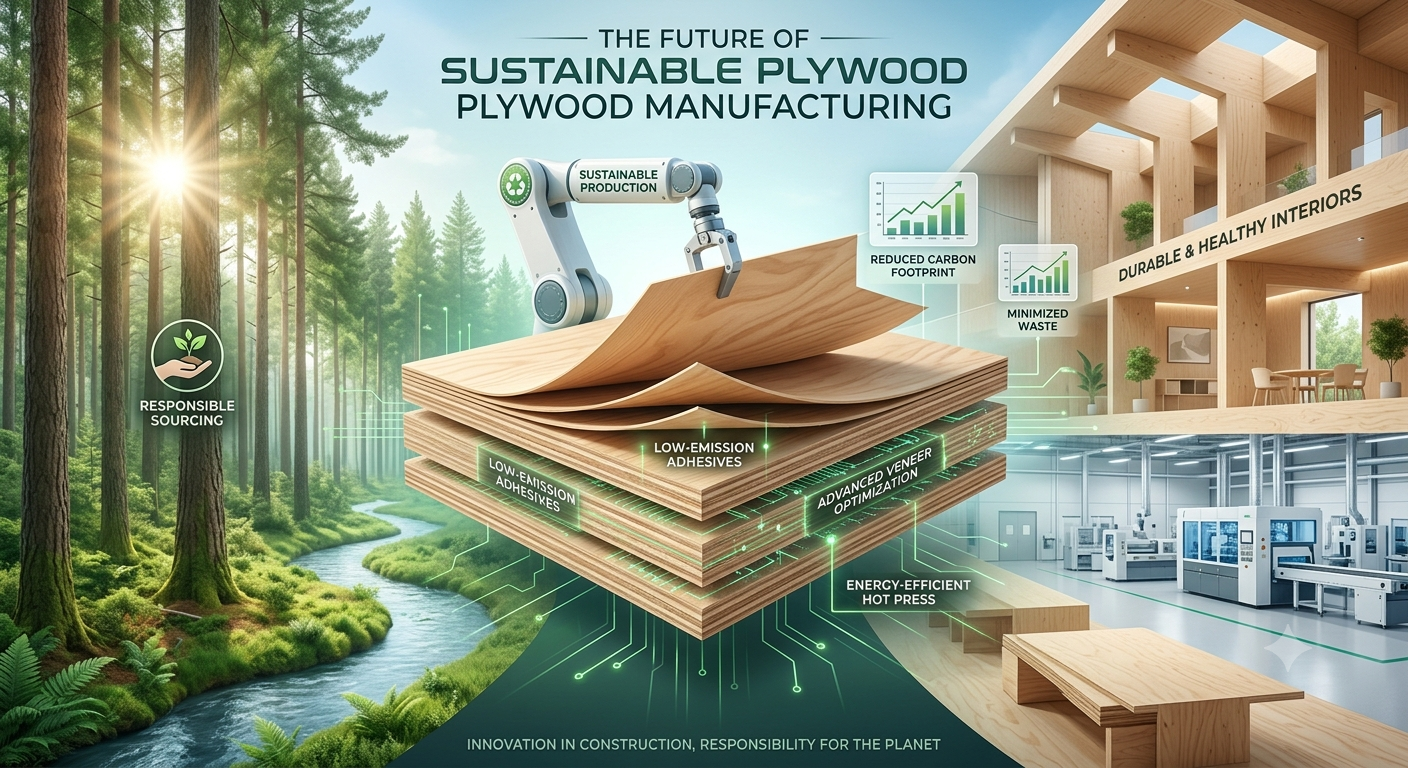
Future of Sustainable Plywood Manufacturing
As the world becomes increasingly focused on environmental responsibility, the building materials industry is undergoing a significant transformation. Homeowners, architects, interior designers, builders, and furniture manufacturers are no longer looking only for strength and durability—they also want materials that are responsibly produced and environmentally friendly.
Plywood has long been one of the most versatile materials used in construction and furniture manufacturing. Today, the industry is evolving with sustainable forestry practices, cleaner manufacturing technologies, low-emission adhesives, and energy-efficient production methods. These innovations are helping manufacturers reduce their environmental footprint while delivering high-performance plywood that meets the needs of modern construction.
The future of plywood manufacturing is not just about producing stronger panels; it is about creating products that balance quality, durability, and sustainability.
Why Sustainability Matters in the Plywood Industry
The demand for sustainable building materials has grown rapidly over the past decade. Governments, architects, and environmentally conscious consumers are encouraging manufacturers to adopt greener practices throughout the production process.
Sustainable plywood manufacturing helps:
- Reduce pressure on natural forests
- Promote responsible timber harvesting
- Lower carbon emissions
- Minimize production waste
- Improve indoor air quality
- Support green building certifications
- Conserve natural resources for future generations
Choosing sustainably manufactured plywood allows homeowners and businesses to contribute to a healthier environment without compromising on performance.
Responsibly Sourced Timber
The journey toward sustainable plywood begins with responsible sourcing of raw materials.
Modern plywood manufacturers increasingly rely on timber from managed plantations and responsibly cultivated forests, where trees are replanted and harvested under regulated practices. This approach helps maintain ecological balance while ensuring a continuous supply of quality wood.
Responsible sourcing also supports biodiversity, protects wildlife habitats, and reduces the impact of illegal logging.
Cleaner Manufacturing Processes
Today's plywood factories are adopting advanced production technologies that reduce waste and improve efficiency.
Modern manufacturing practices include:
- Optimized veneer cutting to maximize timber utilization
- Automated production systems that reduce material wastage
- Energy-efficient hot press technology
- Precision calibration for consistent panel thickness
- Improved quality control through automated inspection
These improvements allow manufacturers to produce more plywood using fewer natural resources while maintaining high quality.
Low-Emission Adhesives for Healthier Interiors
One of the biggest advancements in sustainable plywood manufacturing is the development of low-emission adhesives.
Traditional adhesives can release volatile organic compounds (VOCs), which may affect indoor air quality. Modern manufacturing increasingly focuses on low-emission bonding systems that contribute to healthier living and working environments.
Low-emission plywood offers benefits such as:
- Better indoor air quality
- Reduced chemical emissions
- Safer homes and offices
- Improved comfort for occupants
- Support for environmentally responsible construction
This makes sustainable plywood an excellent choice for schools, hospitals, offices, and residential projects.
Energy-Efficient Production
Energy consumption is another important aspect of sustainable manufacturing.
Many modern plywood facilities are investing in technologies that reduce electricity and fuel usage throughout production.
Examples include:
- High-efficiency drying systems
- Heat recovery technologies
- Automated production controls
- Reduced machine downtime
- Optimized manufacturing schedules
These improvements help lower greenhouse gas emissions while reducing overall production costs.
Reducing Waste Through Smart Manufacturing
Sustainability is not only about raw materials—it also involves making better use of every piece of timber.
Advanced production planning and digital manufacturing technologies help manufacturers:
- Reduce offcuts
- Optimize cutting layouts
- Reuse production waste
- Improve material yield
- Minimize rejected panels
Less waste means more efficient manufacturing and reduced environmental impact.
Longer-Lasting Products Reduce Resource Consumption
One of the most overlooked aspects of sustainability is durability.
Furniture or interiors that require replacement every few years consume significantly more resources than products designed to last for decades.
Premium plywood contributes to sustainability by offering:
- Longer service life
- Better moisture resistance
- Higher structural strength
- Excellent dimensional stability
- Reduced maintenance
- Fewer replacements
Choosing durable plywood means fewer raw materials are required over time, making it a smarter environmental choice.
Supporting Green Building Projects
Green buildings are becoming increasingly popular in residential, commercial, and institutional construction.
Sustainably manufactured plywood supports these projects by providing:
- Durable structural performance
- Environmentally responsible materials
- Improved indoor environmental quality
- Reduced lifecycle environmental impact
- Compatibility with sustainable construction practices
Architects and designers are increasingly specifying eco-friendly materials to meet modern building standards and client expectations.
The Future of Smart and Sustainable Manufacturing
The next generation of plywood manufacturing will combine sustainability with advanced technology.
Emerging innovations include:
- AI-powered production optimization
- Automated quality inspection
- Smart resource management
- Digital manufacturing systems
- Reduced carbon footprint initiatives
- Improved material traceability
- Higher manufacturing efficiency
These technologies will help manufacturers produce stronger, more consistent, and environmentally responsible plywood while reducing waste and conserving natural resources.
Choosing Sustainable Plywood for Your Project
Whether you're designing a home, office, hotel, retail space, or educational institution, selecting sustainably manufactured plywood is an investment in both quality and the environment.
Look for plywood that offers:
- Responsibly sourced timber
- Low-emission adhesives
- High durability
- Moisture resistance
- Strong screw holding
- Consistent manufacturing quality
- Long product lifespan
These characteristics ensure your furniture and interiors remain durable while supporting responsible construction practices.
Conclusion
The future of plywood manufacturing is being shaped by innovation, environmental responsibility, and smarter production methods. Sustainable practices such as responsible timber sourcing, cleaner manufacturing, low-emission adhesives, and energy-efficient technologies are helping the industry deliver products that are both high-performing and environmentally conscious.
As demand for green buildings and durable interiors continues to grow, sustainable plywood will play an increasingly important role in modern construction and furniture manufacturing. By choosing high-quality plywood produced with responsible practices, homeowners, architects, builders, and manufacturers can create beautiful spaces while contributing to a more sustainable future.
Why Choose Plyneer?
At Plyneer Industries Pvt. Ltd., we are committed to manufacturing premium plywood that combines performance, durability, and responsible production practices. Our focus on quality materials, precision manufacturing, and long-lasting performance helps customers build furniture and interiors that stand the test of time.
Whether you're creating a home, office, or commercial project, Plyneer offers dependable plywood solutions designed for modern construction and sustainable living.
Build responsibly. Build to last. Build with Plyneer.
📞 +91 8861717273


