

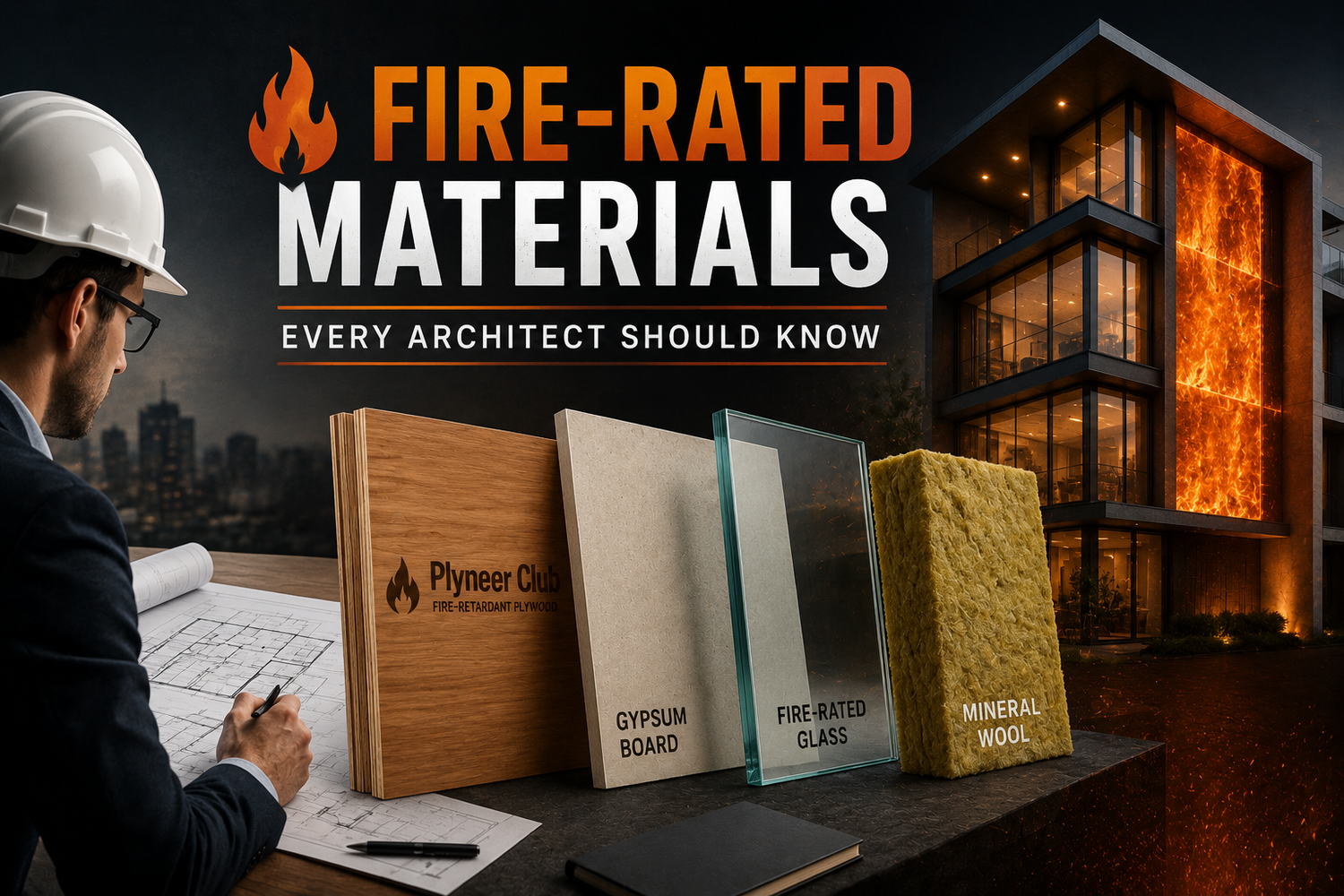
Modern architecture is no longer just about aesthetics and functionality. Today, fire safety is one of the most important considerations in building design. Whether designing homes, offices, hospitals, hotels, or commercial spaces, architects must select materials that help slow fire spread, protect occupants, and improve evacuation time.
What Are Fire-Rated Materials?
Fire-rated materials are specially engineered products tested to withstand fire exposure for a specific period. Their primary purpose is to improve safety by:
- Delaying ignition
- Reducing flame spread
- Minimizing smoke generation
- Maintaining structural stability
- Providing more evacuation time
Fire ratings are usually measured in minutes or hours, indicating how long a material can resist fire under controlled conditions.
Why Fire-Rated Materials Matter
Building fires can cause severe property damage and put lives at risk. While alarms and sprinklers are essential, passive fire protection begins with the materials used during construction.
Key Benefits
✅ Improves occupant safety
✅ Reduces property damage
✅ Enhances building resilience
✅ Supports building code compliance
✅ May reduce insurance risks
Architects who prioritize fire-rated materials create safer and more durable buildings.
1. Fire-Rated Plywood
Fire-rated plywood has become a critical material for modern interiors. Unlike ordinary plywood, it is treated with fire-retardant chemicals that help slow down combustion and flame spread.
Common Applications
- Modular kitchens
- Wardrobes
- TV units
- Office furniture
- Wall paneling
- Retail interiors
Benefits
✔ Delays ignition
✔ Slows flame spread
✔ Improves evacuation time
✔ Enhances interior fire safety
Products such as Plyneer Club Fire-Retardant Plywood combine fire resistance, waterproof performance, and durability, making them suitable for residential and commercial projects.
2. Gypsum Boards
Gypsum boards are among the most widely used passive fire-protection materials. The gypsum core contains chemically bound water that is released when exposed to heat, helping slow fire progression.
Applications
- False ceilings
- Drywall partitions
- Fire-rated wall assemblies
Benefits
✔ Excellent fire resistance
✔ Lightweight installation
✔ Cost-effective
✔ Smooth architectural finish
Gypsum board systems are commonly used to achieve fire-rated walls and ceilings in commercial buildings.
3. Fire-Rated Glass
Modern architecture often demands open and transparent spaces. Fire-rated glass offers visibility while maintaining fire protection.
Common Uses
- Office partitions
- Staircase enclosures
- Emergency escape routes
- Hotel corridors
Benefits
✔ Allows natural light
✔ Maintains visibility
✔ Slows fire spread
✔ Supports compartmentation
This makes it an ideal choice for contemporary architectural designs.
4. Mineral Wool Insulation
Mineral wool is a non-combustible insulation material manufactured from natural stone and recycled materials.
Applications
- Wall cavities
- Ceiling systems
- HVAC insulation
- Fire barriers
Benefits
✔ Outstanding fire resistance
✔ Excellent thermal insulation
✔ Superior sound absorption
✔ High melting point
It is widely used in hospitals, commercial buildings, and high-rise structures.
5. Fire-Rated Doors
Fire-rated doors are essential for preventing the spread of fire and smoke between building compartments.
Typical Locations
- Staircases
- Electrical rooms
- Emergency exits
- Hotel corridors
Benefits
✔ Restricts fire movement
✔ Controls smoke spread
✔ Protects escape routes
✔ Supports code compliance
These doors play a critical role in occupant safety during emergencies.
6. Fire-Protected Structural Steel
Although steel is strong, it can lose structural strength at temperatures above 550°C. Architects often protect steel using:
- Intumescent coatings
- Fireproof boards
- Spray-applied fire protection
Benefits
✔ Improved structural stability
✔ Extended evacuation time
✔ Enhanced building resilience
This protection helps maintain a building's structural integrity during a fire.
7. Fire-Rated Concrete
Concrete remains one of the most fire-resistant construction materials available.
Benefits
✔ High thermal mass
✔ Slow heat transfer
✔ Structural stability
✔ Long service life
It is extensively used in columns, beams, walls, floors, and staircases.
Key Takeaways for Architects
When selecting fire-rated materials, architects should evaluate:
- Building type
- Occupancy levels
- Fire safety regulations
- Material compatibility
- Long-term maintenance requirements
A well-designed fire safety strategy combines multiple fire-rated materials to create a safer and more resilient building.
Conclusion
Fire safety should be integrated into every architectural project from the earliest design stage. Materials such as fire-rated plywood, gypsum boards, fire-rated glass, mineral wool, fire-rated doors, structural fire protection systems, and fire-rated concrete all contribute to a safer built environment.
By understanding and specifying the right fire-rated materials, architects can create buildings that not only look impressive but also protect lives, minimize damage, and comply with modern safety standards.


