

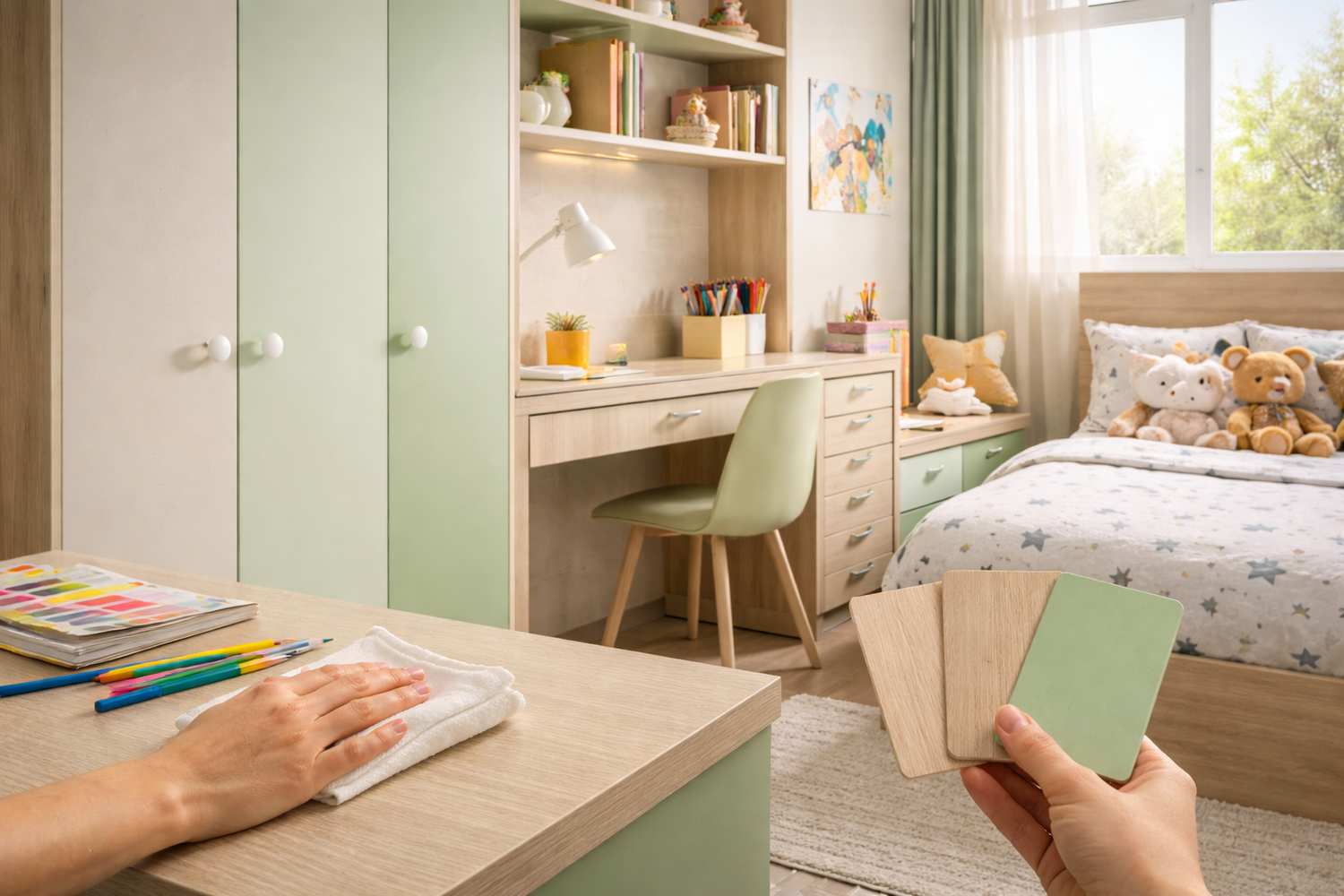
Children’s rooms are high-energy spaces. From toys and books to drawing, climbing, and constant movement—furniture here faces far more wear and tear than most other rooms. Add safety concerns, hygiene, and frequent cleaning, and laminate selection becomes critical.
This guide explains which laminates are best for children’s rooms, what to avoid, and how to create a space that’s safe, durable, and easy to maintain as your child grows.
1. What Matters Most in Children’s Rooms
Before choosing colours or designs, focus on these essentials:
✔ Scratch & impact resistance
✔ Low chemical emissions (child-safe)
✔ Easy cleaning & stain resistance
✔ Soft, non-glare finishes
✔ Durability for long-term use
2. Best Laminate Finishes for Children’s Rooms
✅ Matte Laminates (Best Overall Choice)
Matte laminates are the safest and most practical option.
Why they work
- Hide scratches and fingerprints
- No glare (easy on young eyes)
- Calm, soft appearance
- Easy to clean daily
Best for
- Wardrobes
- Study tables
- Storage units
- Bed-side cabinets
✅ Anti-Fingerprint Laminates (Great Upgrade)
Perfect for high-touch furniture.
Why they work
- Reduced smudges from small hands
- Easy wipe-clean surface
- Premium, soft-touch feel
Best for
- Wardrobe shutters
- Study desks
- Drawer fronts
✅ Woodgrain Laminates (Timeless & Forgiving)
Wood-look laminates are both practical and visually warm.
Why they work
- Grain hides minor scratches
- Timeless (won’t feel childish as kids grow)
- Pairs well with colourful walls or décor
Best tones
- Light oak
- Beech
- Maple
- Soft walnut
3. Laminates to Avoid in Children’s Rooms
🚫 High-Gloss Laminates
- Show scratches easily
- Slippery & reflective
- Fingerprints very visible
🚫 Very Dark Solid Colours
- Dust and scratches stand out
- Higher maintenance
🚫 Sharp or Heavy Textures
- Harder to clean
- Can trap dust
4. Colour Choices That Grow with Your Child
Instead of trendy themes, think long-term.
✔ Best Colour Families
- Pastel neutrals (mint, peach, powder blue)
- Light greys & beige
- Soft wood tones
👉 Use wall paint, decals, or accessories for playful themes—not the laminate.
5. Safety First: Child-Friendly Considerations
Laminates should support safety, not create risks.
✔ What to Look For
- Rounded furniture edges
- Proper PVC edge banding
- Smooth, splinter-free surfaces
- Low-VOC / eco-friendly laminates
6. Thickness Recommendation (Important)
For children’s furniture:
- Minimum 1.0 mm laminate recommended
- Avoid thin laminates (0.6–0.8 mm)
- Thicker laminates resist chipping & impact better
7. The Board Beneath Is Equally Important
Laminate performance depends heavily on the base board.
✔ Best Boards for Children’s Rooms
- HDiHMR boards → wardrobes, desks
- BWR plywood → areas with moderate moisture
🚫 Avoid particle board or low-grade MDF.
⭐ Plyneer’s Recommendation for Children’s Rooms
At Plyneer, we suggest:
- Matte or anti-fingerprint laminates in light colours
- Woodgrain finishes for longevity
- 1.0 mm thickness for better durability
- Pair with Plyneer HDiHMR or BWR plywood
This ensures furniture that’s safe, sturdy, and stress-free for parents.
⭐ Conclusion
The best laminates for children’s rooms are not the loudest or glossiest—they’re the ones that are safe, durable, and forgiving.
By choosing matte or woodgrain laminates in child-friendly colours, using proper thickness, and pairing them with strong base boards, you can create a room that adapts as your child grows—without constant repairs or replacements.


