

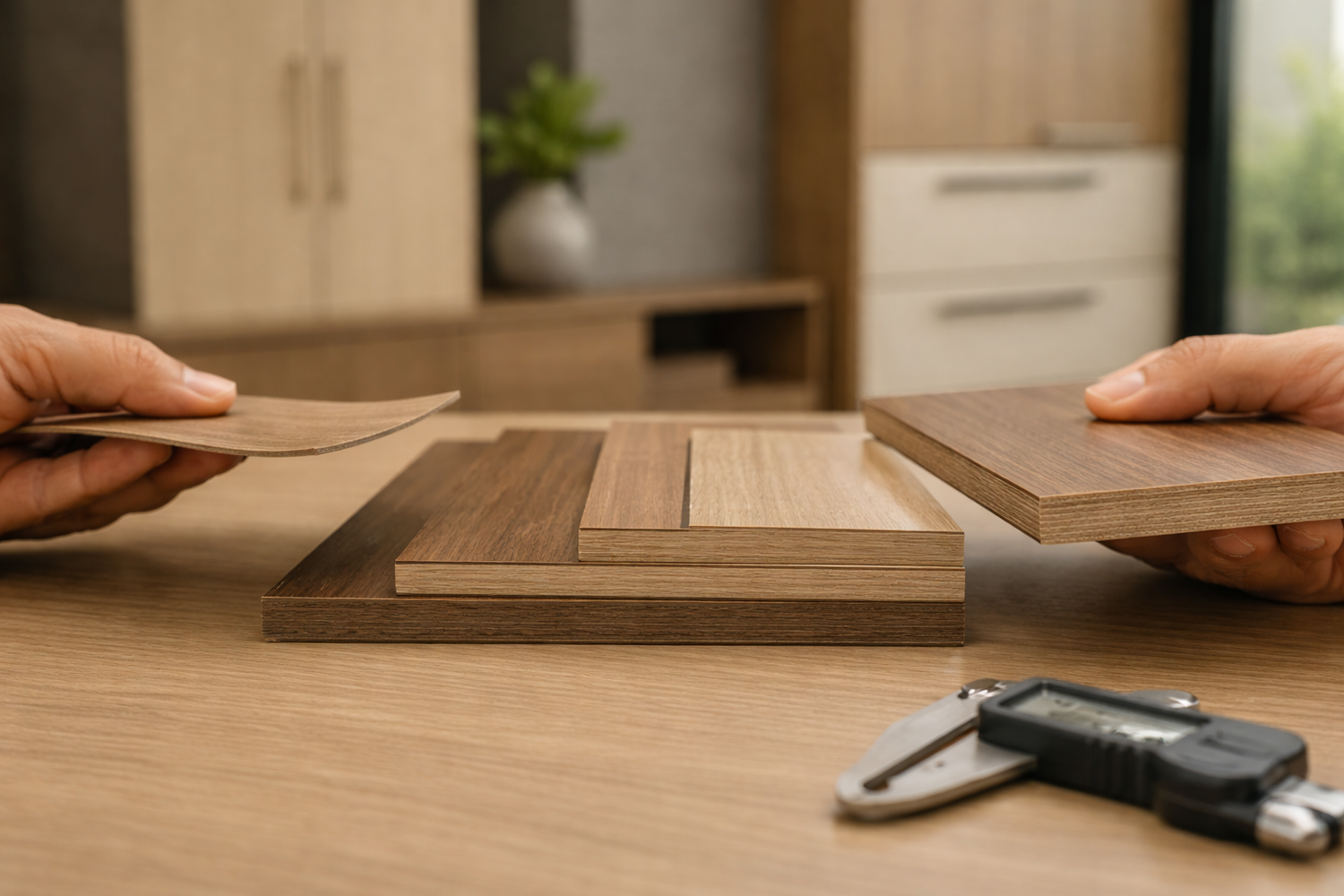
One of the most overlooked decisions while choosing laminates is thickness. Many buyers assume all laminates are the same—but laminate thickness plays a huge role in durability, finish quality, and long-term performance.
Choosing the wrong thickness can lead to:
- Chipping edges
- Poor bonding
- Faster wear and tear
- Furniture that ages badly
This guide explains different laminate thickness options, where each one works best, and what professionals actually recommend for furniture.
1. Why Laminate Thickness Matters
Laminate thickness affects:
- Surface strength
- Scratch and impact resistance
- Edge finishing quality
- Overall life of furniture
Thicker laminates are generally more durable and forgiving during carpentry and daily use.
2. Common Laminate Thickness Options in India
0.6 mm Laminates
This is the thinnest commonly available laminate.
✔ Suitable For
- Vertical panels
- Decorative wall panels
- Low-use areas
❌ Limitations
- Chips easily
- Poor edge finish
- Not recommended for furniture shutters
👉 Avoid for wardrobes, kitchens, desks, or cabinets
0.8 mm Laminates
This is a basic acceptable thickness for light furniture use.
✔ Suitable For
- Wardrobe backs
- Side panels
- Light-use furniture
⚠ Limitations
- Limited impact resistance
- Edges can still chip
👉 Works, but not ideal for long-term durability
1.0 mm Laminates (Most Recommended)
This is the industry standard for quality furniture.
✔ Best For
- Wardrobe shutters
- Kitchen cabinets
- Study tables
- TV units
- Office furniture
✔ Why It’s Ideal
- Good impact resistance
- Better edge banding finish
- Handles daily wear well
- Easy for carpenters to work with
👉 Best balance of cost + durability
1.25 mm Laminates (Premium Choice)
This is a thicker, premium laminate option.
✔ Best For
- High-use commercial furniture
- Office workstations
- Reception desks
- Retail counters
✔ Advantages
- Excellent impact resistance
- Superior edge durability
- Longest lifespan
⚠ Slightly higher cost, but worth it for heavy-use zones.
3. Thickness Recommendation by Furniture Type
| Furniture Type | Recommended Thickness |
|---|---|
| Wardrobe shutters | 1.0 mm |
| Kitchen cabinets | 1.0 – 1.25 mm |
| TV units | 1.0 mm |
| Study tables | 1.0 mm |
| Office desks | 1.0 – 1.25 mm |
| Side panels / backs | 0.8 mm |
| Decorative panels | 0.6 – 0.8 mm |
4. Thickness vs Finish: What to Know
Some finishes benefit more from thickness:
- Matte laminates → 1.0 mm ideal
- Woodgrain laminates → 1.0 mm for better grain protection
- High-gloss laminates → Minimum 1.0 mm (to avoid edge damage)
- Textured / fabric laminates → 1.0 mm or higher
Thin laminates struggle to hold texture and finish over time.
5. Thickness Alone Is Not Enough
Thickness works best when paired with:
✔ Good resin quality
✔ High-pressure lamination process
✔ Strong base material
Even a 1.25 mm laminate will fail if pasted on low-quality board.
6. Importance of the Base Board
For best results:
- BWP plywood → kitchens & wet areas
- BWR plywood → wardrobes & moderate moisture
- HDiHMR boards → cabinets & vertical panels
Laminate thickness + correct board = long furniture life.
⭐ Plyneer’s Expert Recommendation
At Plyneer, we recommend:
- 1.0 mm laminates for most residential furniture
- 1.25 mm laminates for offices & heavy-use areas
- Avoid thin laminates for shutters and tabletops
Our laminates are engineered with:
✔ Consistent thickness
✔ Strong bonding
✔ Better edge durability
✔ Compatibility with Plyneer plywood & HDiHMR boards
⭐ Conclusion
The best laminate thickness for furniture is not the thinnest or the cheapest—it’s the one that matches usage, furniture type, and base material.
For most Indian homes:
👉 1.0 mm laminate is the safest and smartest choice
For commercial or heavy-use furniture:
👉 1.25 mm offers added durability
Choosing the right thickness today saves you from repairs and replacements tomorrow.


