

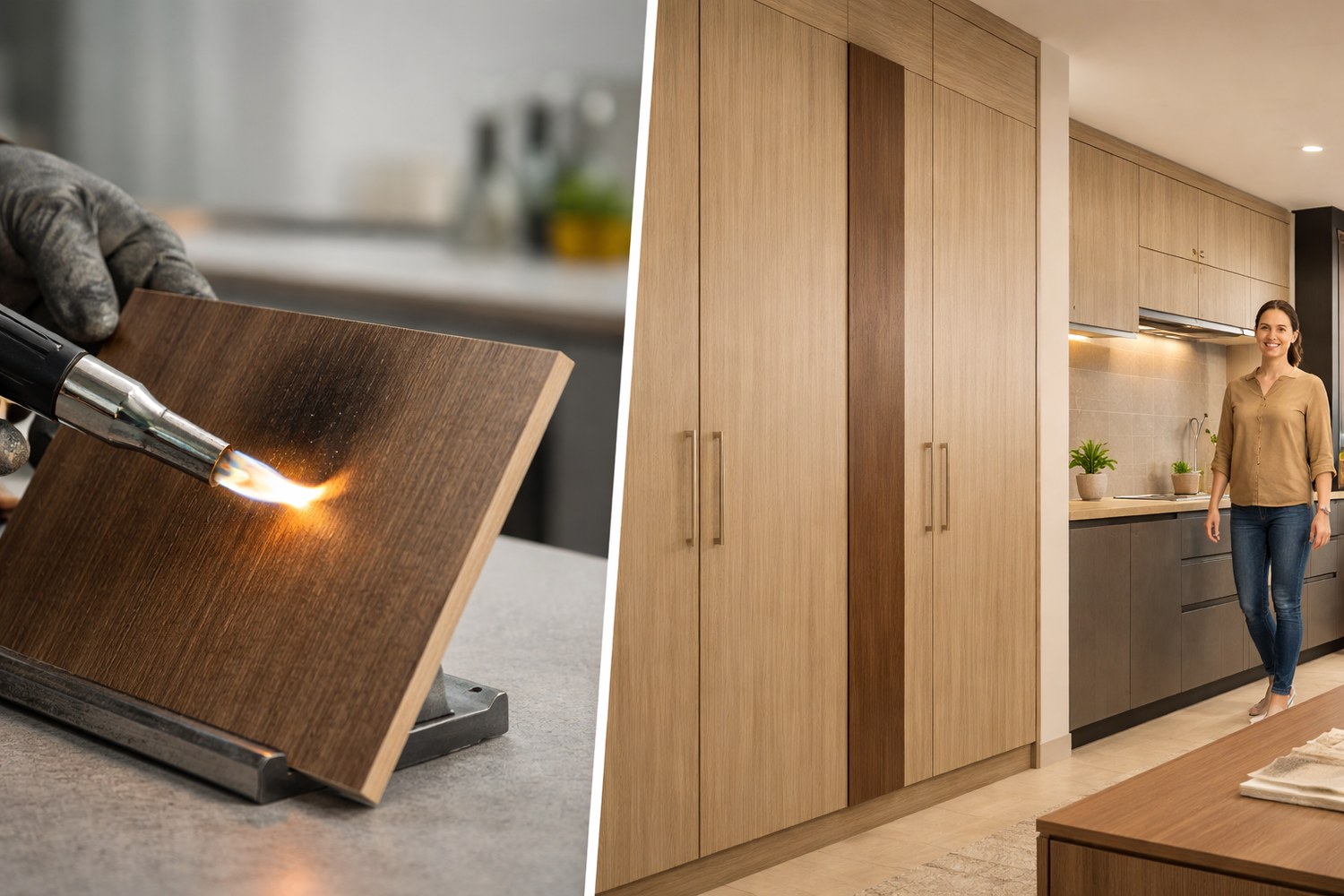
Fire safety is no longer just a concern for commercial buildings. With modern electrical loads, modular kitchens, ACs, and appliances becoming common, homeowners are increasingly asking:
“Are fire-resistant laminates actually worth the extra cost?”
The short answer is:
👉 Yes—when used in the right places and with the right expectations.
This guide explains what fire-resistant laminates really do, what they don’t, and when investing in them makes genuine sense.
1. What Are Fire-Resistant Laminates?
Fire-resistant laminates are specially engineered laminates that:
- Delay flame spread
- Reduce heat release
- Do not ignite easily
- Produce less smoke compared to regular laminates
They are manufactured using fire-retardant resins and treated kraft paper, and tested against fire safety standards.
⚠ Important to understand:
They are fire-retardant, not fire-proof.
2. What Fire-Resistant Laminates Actually Do (Reality Check)
✔ What They DO
- Slow down flame spread
- Buy valuable evacuation time
- Reduce intensity of surface burning
- Improve overall fire safety of interiors
❌ What They DON’T Do
- They do not stop fires completely
- They do not replace fire alarms or sprinklers
- They do not protect poor wiring or unsafe appliances
👉 Think of them as damage control, not a magic shield.
3. Where Fire-Resistant Laminates Are Truly Worth It
🔥 Kitchens
- Near cooking zones
- Near electrical appliances
- Modular kitchens in apartments
✔ Strongly recommended
🏢 Commercial & Office Spaces
- Workstations
- Server rooms
- Conference areas
- High electrical load zones
✔ Often mandatory or strongly advised
🏨 Hotels, Hospitals & Schools
- Public safety environments
- High footfall
- Compliance-driven projects
✔ Highly recommended
🚪 Electrical Panels & Utility Areas
- DB units
- Storage near wiring
✔ Very useful
🛏️ Bedrooms & Wardrobes
❌ Not always necessary unless:
- Close to electrical panels
- High-risk zones
4. Fire-Resistant Laminates vs Regular Laminates
| Feature | Regular Laminate | Fire-Resistant Laminate |
|---|---|---|
| Flame spread | Faster | Slower |
| Smoke generation | Higher | Lower |
| Fire safety | Basic | Enhanced |
| Cost | Lower | Slightly higher |
| Application | General use | Safety-critical zones |
5. The Board Beneath Matters More Than You Think
Fire-resistant laminates work best only when paired with the right board.
✔ Best Pairings
- Fire-retardant plywood
- Fire-retardant HDiHMR boards
❌ Poor Pairings
- Low-grade MDF
- Cheap particle board
👉 A fire-safe laminate on a weak board gives false confidence.
6. Cost vs Value: Is It Worth Paying Extra?
Fire-resistant laminates typically cost 10–25% more than standard laminates.
✔ Why It’s Worth It
- Improved safety
- Compliance with commercial norms
- Better risk management
- Peace of mind
When compared to:
- Fire damage losses
- Insurance complications
- Human safety
👉 The extra cost is small—but the protection is significant.
7. Common Myths About Fire-Resistant Laminates
❌ “They won’t burn at all”
❌ “Only commercial buildings need them”
❌ “They make furniture ugly”
✔ Reality:
Modern fire-resistant laminates come in matte, woodgrain, stone, and textured finishes—without compromising aesthetics.
⭐ Plyneer’s Honest Recommendation
At Plyneer, we recommend fire-resistant laminates:
- In kitchens
- In commercial & office interiors
- In public-use environments
- Wherever electrical load is high
When combined with Plyneer fire-retardant plywood or HDiHMR boards, they create a complete fire-safety surface solution—not just a cosmetic upgrade.
⭐ Conclusion
Fire-resistant laminates are not about fear—they’re about preparedness.
They won’t stop a fire, but they can slow it down, reduce damage, and protect lives. Used intelligently and in the right zones, they are absolutely worth the investment.
Safety is never an expense—it’s insurance.


