

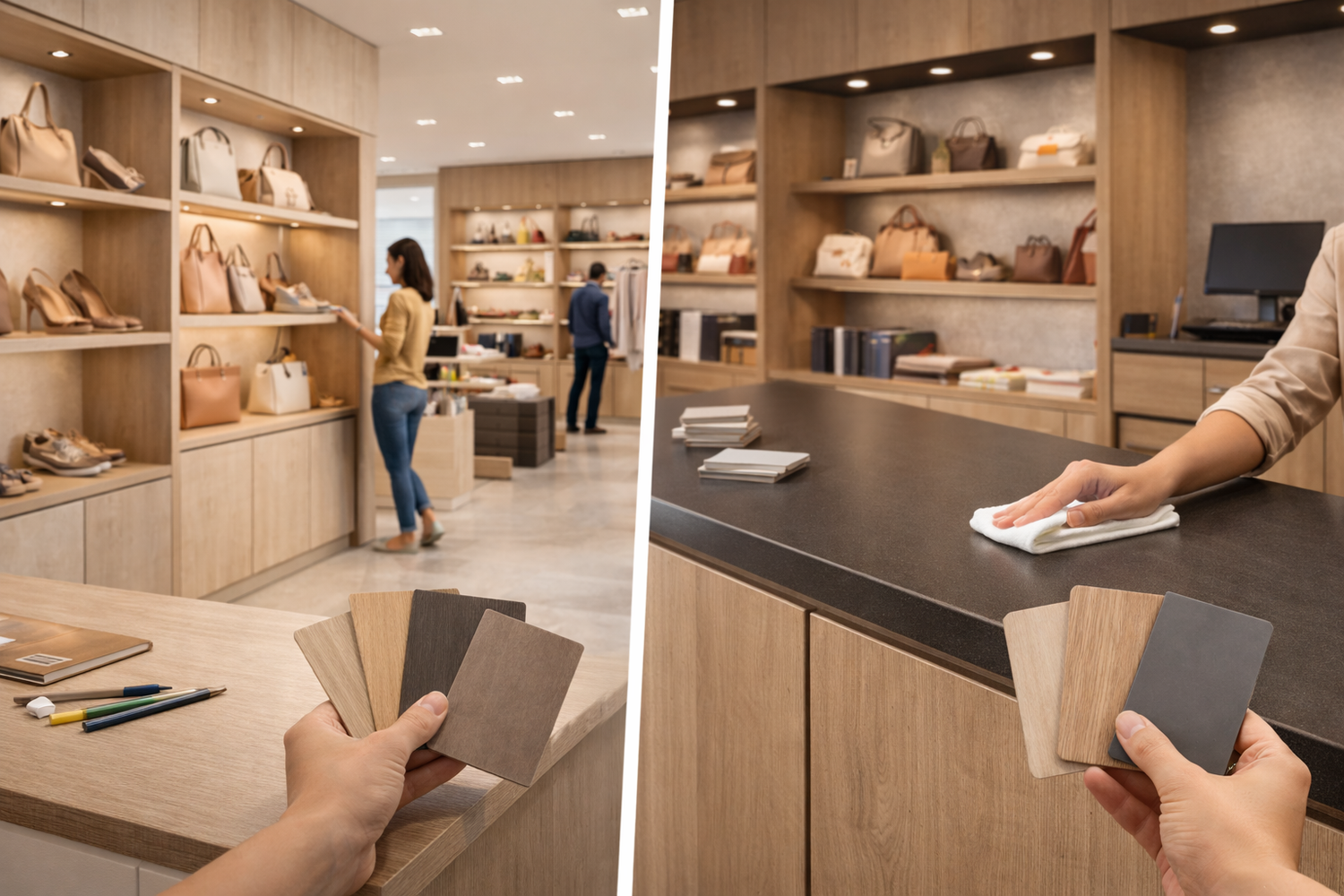
Retail stores and showrooms are not just interiors—they’re brand experiences. From constant footfall and frequent cleaning to strong lighting and daily product handling, surfaces here are under continuous stress.
Choosing the wrong laminate can result in visible scratches, faded colours, and tired-looking displays within months. This guide explains which laminates work best for retail stores and showrooms, where to use them, and how to balance visual impact with long-term durability.
1. What Retail & Showroom Laminates Must Handle
Unlike homes, retail spaces demand laminates that can withstand:
✔ High footfall & frequent touch
✔ Continuous artificial lighting
✔ Regular cleaning & disinfecting
✔ Moving merchandise & fixtures
✔ Brand-critical colour consistency
That’s why commercial-grade laminates are essential.
2. Best Laminate Types for Retail & Showrooms
✅ High-Pressure Laminates (HPL) – The Retail Standard
HPL is the most reliable choice for commercial interiors.
Why they work
- High scratch & abrasion resistance
- Strong surface hardness
- Better moisture & stain resistance
- Longer lifespan under daily use
Best for
- Display units
- Cash counters
- Shelving systems
- Trial rooms
✅ Matte Laminates – Clean & Professional
Matte laminates are practical and visually refined.
Why they work
- Hide fingerprints & minor scratches
- No glare under spotlights
- Easy maintenance
Best for
- Wall panels
- Storage cabinets
- Back panels & counters
✅ Woodgrain Laminates – Premium Without Maintenance
Woodgrain laminates add warmth without the upkeep of veneer.
Why they work
- Grain masks wear & scratches
- Consistent colour across multiple outlets
- Works across luxury & mid-range brands
Best for
- Feature walls
- Premium display zones
- Brand storytelling areas
✅ Stone / Concrete Finish Laminates – Modern Retail Look
Ideal for contemporary brands.
Why they work
- Neutral & sophisticated
- Hide dust and wear
- Pair well with metal & glass
Best for
- Showroom counters
- Accent walls
- High-end retail spaces
⚠ High-Gloss Laminates – Use Selectively
High-gloss laminates can elevate visual impact—but need controlled usage.
Best used for
- Vertical feature panels
- Logo backdrops
- Highlight zones
🚫 Avoid on counters or high-touch areas (scratches show easily).
3. Zone-Wise Laminate Recommendations
🛍️ Display Units & Shelves
- HPL matte or woodgrain laminates
- Thickness: 1.0–1.25 mm
💳 Cash Counters & Billing Desks
- HPL laminates
- Stone or matte finishes
- Strong scratch resistance required
🪞 Trial Rooms
- Matte or textured laminates
- Neutral tones for lighting accuracy
🧱 Feature Walls & Branding Panels
- Woodgrain, stone, or subtle textures
- Focus on brand colours & contrast
4. Colour Strategy for Retail Spaces
Retail colours should support products—not overpower them.
✔ Safe & Scalable Choices
- Warm neutrals
- Soft greys & taupes
- Natural wood tones
✔ For Brand Accents
- Use bold colours only in limited zones
- Balance with neutral laminates elsewhere
5. Thickness & Durability (Non-Negotiable)
Retail furniture should never use thin laminates.
✔ Minimum 1.0 mm laminate
✔ 1.25 mm recommended for counters & shelves
Thin laminates chip faster and look worn quickly in commercial use.
6. The Right Base Board Is Critical
Laminates perform best on strong boards.
✔ Recommended Boards
- HDiHMR boards → shelves, cabinets, panels
- BWR plywood → moderate moisture zones
- BWP plywood → areas near entrances or cleaning zones
🚫 Avoid MDF or particle board in retail environments.
⭐ Why Retail Designers Prefer Plyneer Laminates
Plyneer laminates are designed for commercial consistency:
✔ Batch-to-batch colour accuracy
✔ Commercial-grade durability
✔ Scratch & stain resistance
✔ Easy maintenance
✔ Reliable availability for multi-store rollouts
Perfect for brands expanding across cities.
⭐ Conclusion
Retail and showroom interiors need laminates that can sell, survive, and stay sharp. By choosing HPL laminates in practical finishes, using correct thickness, and pairing them with strong boards, stores remain visually powerful long after opening day.
Good laminates don’t just display products—they protect your brand image.


