

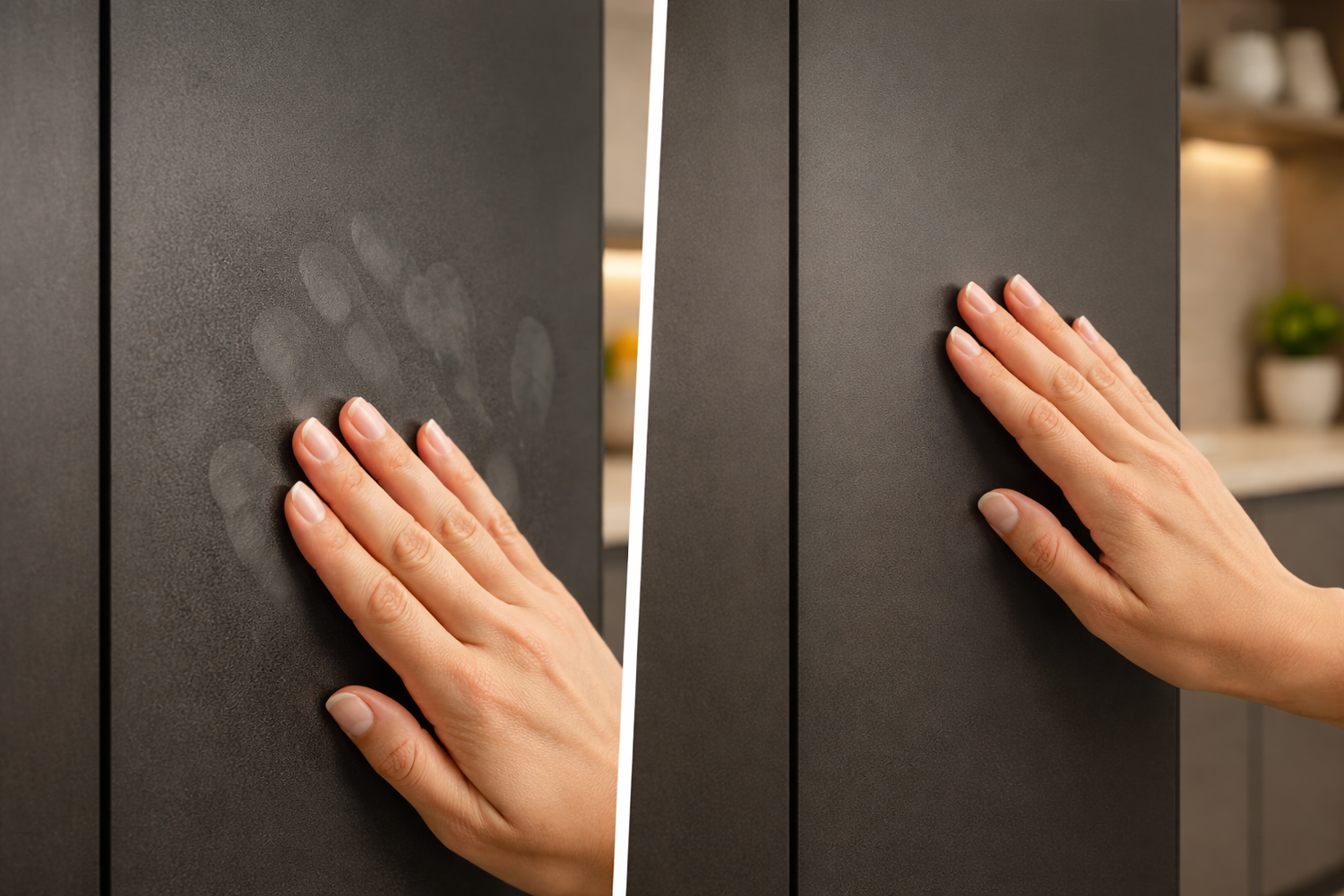
Fingerprints on laminates are one of the biggest daily irritations—especially on dark colours, kitchen shutters, wardrobes, and office furniture. That’s why anti-fingerprint laminates have become a popular choice.
But the real question is:
Do anti-fingerprint laminates actually work—or is it just a marketing term?
Let’s break down how they work, where they help, where they don’t, and whether they’re worth the extra cost.
1. What Are Anti-Fingerprint Laminates?
Anti-fingerprint laminates are laminates with a special surface treatment that reduces the visibility of:
- Fingerprints
- Smudges
- Oil marks
They are usually:
- Matte or soft-touch in finish
- Made with advanced resin systems
- Designed to diffuse light rather than reflect it
👉 They don’t eliminate fingerprints completely, but they make them far less visible.
2. How Do Anti-Fingerprint Laminates Work?
These laminates use micro-textured or low-sheen surfaces that:
- Prevent oils from spreading visibly
- Reduce reflection (no glossy glare)
- Allow easy wipe-off without streaks
This combination makes fingerprints less noticeable and easier to clean.
3. Do They Actually Work? (Honest Answer)
✅ Yes, they work—within limits
✔ What You’ll Notice
- Fingerprints are significantly reduced
- Smudges don’t stand out visually
- Surfaces look clean for longer
- Cleaning frequency reduces
❌ What You Shouldn’t Expect
- 100% fingerprint-proof surface
- Zero cleaning forever
- Same performance as glass coatings
👉 Think of them as low-maintenance, not maintenance-free.
4. Where Anti-Fingerprint Laminates Make the Biggest Difference
🍳 Kitchens
✔ One of the best applications
✔ Ideal for base & tall units
✔ Excellent for dark colours
👗 Wardrobes
✔ Especially sliding wardrobes
✔ Handles frequent daily contact
✔ Keeps shutters looking neat
🏢 Offices & Commercial Spaces
✔ Workstations
✔ Storage units
✔ Reception furniture
❌ Where They’re Not Necessary
- Low-touch areas
- Light-coloured laminates
- Decorative panels
5. Anti-Fingerprint vs Regular Matte Laminates
| Feature | Regular Matte | Anti-Fingerprint |
|---|---|---|
| Fingerprint visibility | Medium | Low |
| Smudge resistance | Average | High |
| Finish feel | Standard matte | Soft-touch / premium |
| Maintenance | Regular wiping | Less frequent wiping |
| Cost | Lower | Slightly higher |
6. Are They Worth the Extra Cost?
Anti-fingerprint laminates usually cost 10–20% more than regular matte laminates.
✔ Worth It If:
- You’re using dark colours
- The area has high daily usage
- You want a premium look with low effort
- It’s a kitchen, wardrobe, or office
❌ Not Necessary If:
- You’re using light shades
- The area is low-touch
- Budget is extremely tight
7. Common Myths About Anti-Fingerprint Laminates
❌ “They never show marks”
❌ “They don’t need cleaning”
❌ “Only for luxury homes”
✔ Reality:
- They reduce, not eliminate fingerprints
- They still need basic cleaning
- They’re practical even in mid-range homes
⭐ Plyneer’s Honest Recommendation
At Plyneer, we recommend anti-fingerprint laminates:
For kitchens, wardrobes, and offices
Especially in dark or bold colours
Where daily handling is unavoidable
Our anti-fingerprint laminates are engineered with:
✔ Low-sheen surface technology
✔ Easy-clean coatings
✔ Consistent matte finish
✔ Compatibility with Plyneer BWP/BWR plywood & HDiHMR boards
This ensures cleaner-looking furniture with less effort.
⭐ Conclusion
Anti-fingerprint laminates do work—but only when you understand what they’re meant to do.
They won’t make fingerprints disappear forever, but they dramatically reduce visibility, improve ease of maintenance, and keep interiors looking neat for longer.
If you value clean aesthetics with minimal daily effort, anti-fingerprint laminates are absolutely worth considering.


