

When selecting plywood for furniture, kitchens, wardrobes, or interior projects, many buyers focus on brand, price, and warranty—but often overlook one of the most important factors: plywood thickness.
The thickness of plywood directly affects its:
- Strength
- Load-bearing capacity
- Durability
- Stability
- Screw-holding ability
- Overall lifespan
Choosing the wrong thickness can lead to sagging shelves, weak furniture, bending panels, and costly repairs. Understanding plywood thickness helps homeowners, architects, interior designers, and carpenters build stronger and longer-lasting interiors.
What Is Plywood Thickness?
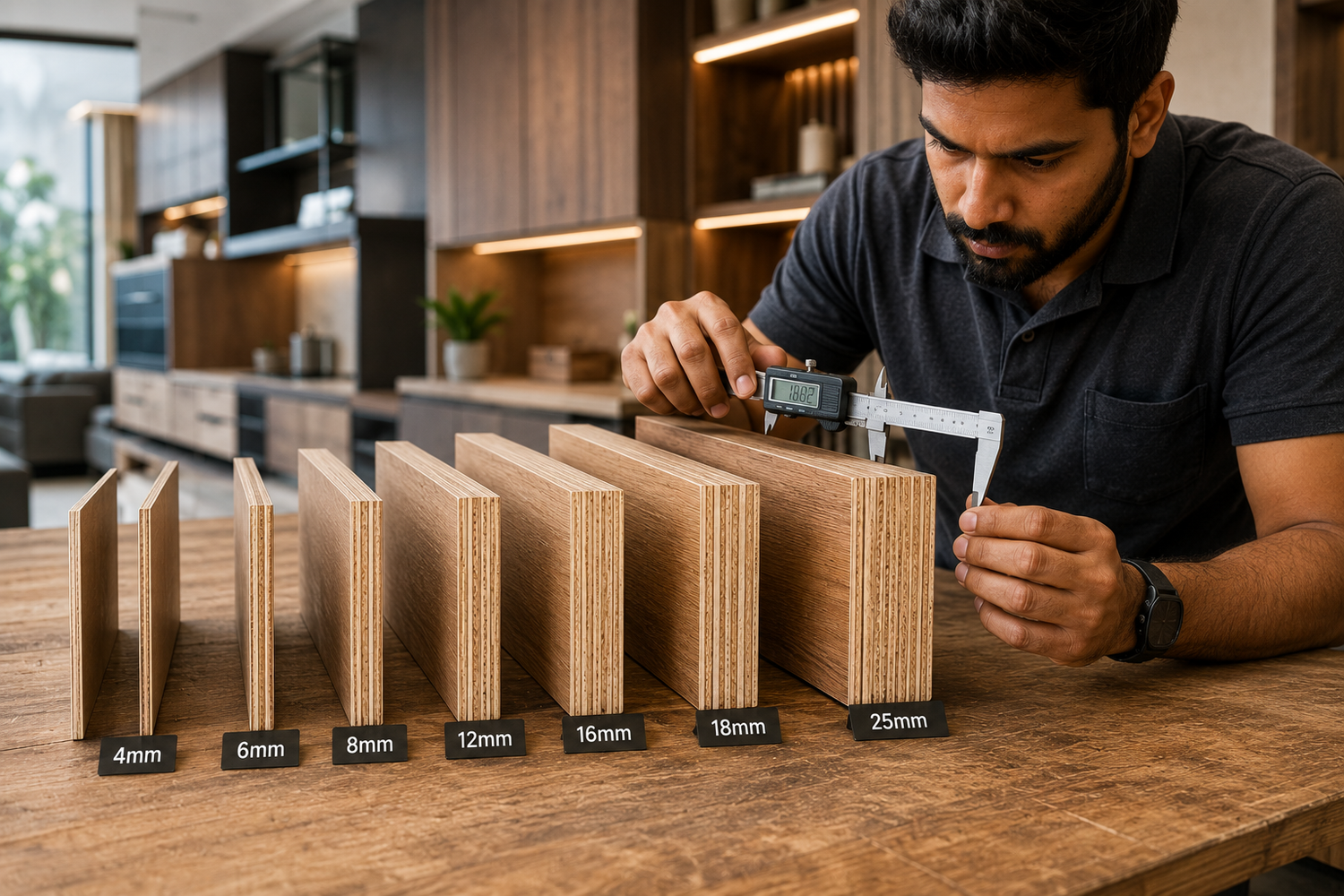
Plywood thickness refers to the actual measurement of the board from one surface to the other.
Common plywood thicknesses available in India include:
| Thickness | Common Applications |
| 4mm | Wall paneling, decorative applications |
| 6mm | Partitions, back panels |
| 8mm | Lightweight furniture |
| 12mm | Cabinet shutters, furniture |
| 16mm | Wardrobes, shelves |
| 18mm | Modular kitchens, premium furniture |
| 25mm | Heavy-duty furniture, countertops |
Among these, 18mm plywood is one of the most widely used thicknesses for premium furniture and modular kitchens.
Why Thickness Is Important
1. Better Load-Bearing Capacity
Thicker plywood can support more weight without bending or sagging.
For example:
- A bookshelf made with 18mm plywood can carry significantly more weight than one made with 12mm plywood.
- Kitchen cabinets storing heavy utensils require thicker plywood for long-term performance.
The greater the thickness, the better the structural strength.
2. Reduced Bending and Warping
Thin plywood panels are more prone to:
- Bending
- Twisting
- Warping
especially when exposed to humidity or heavy loads.
Thicker boards provide greater dimensional stability, making them ideal for:
- Wardrobes
- Large cabinet shutters
- Office furniture
- Display units
3. Stronger Screw Holding
Furniture durability depends heavily on how securely screws and fittings hold within the board.
Thicker plywood offers:
- Better screw grip
- Improved hinge support
- Stronger hardware installation
This is particularly important for:
- Kitchen shutters
- Wardrobe doors
- Drawer systems
- Modular furniture
4. Longer Furniture Life
Furniture made with appropriate plywood thickness generally lasts longer because it experiences:
- Less stress
- Less movement
- Better load distribution
Using insufficient thickness often results in early failure.
Choosing the Right Thickness for Different Applications
Modular Kitchens
Recommended Thickness:
- 18mm for cabinet carcasses
- 18mm for shutters
Why?
Kitchen furniture experiences:
- Heavy loads
- Moisture exposure
- Daily usage
Thicker plywood provides greater durability.
Wardrobes
Recommended Thickness:
- 16mm–18mm
Ideal for:
- Vertical panels
- Shelves
- Doors
This prevents shelf sagging over time.
Beds
Recommended Thickness:
- 18mm–25mm
Beds carry substantial weight and require stronger panels for structural support.
TV Units
Recommended Thickness:
- 12mm–18mm
Depending on design and load requirements.
Office Furniture
Recommended Thickness:
- 18mm
Provides excellent strength and longevity for workstations and storage units.
Thickness and Waterproof Performance
Many people assume thicker plywood is automatically more waterproof.
This is not entirely true.
Water resistance depends primarily on:
- Adhesive quality
- Manufacturing standards
- Core quality
- Certification
For example:
A premium 18mm ISI:710 plywood will generally outperform a poor-quality 25mm plywood in wet conditions.
Therefore, thickness and quality must work together.
Thickness and Fire Safety
For fire-retardant plywood, thickness can influence:
- Structural integrity during fire exposure
- Heat resistance duration
- Overall performance
Premium fire-retardant plywood products are engineered to provide both strength and enhanced safety.
Common Mistakes When Choosing Plywood Thickness
Choosing Based Only on Price
Thinner plywood is cheaper initially but may result in:
- Furniture failure
- Frequent repairs
- Reduced lifespan
Using the Same Thickness Everywhere
Different applications require different thicknesses.
For example:
- Back panels may use 6mm
- Shelves may require 18mm
Using one thickness throughout is often inefficient.
Ignoring Load Requirements
Heavy storage areas should always use thicker plywood.
This includes:
- Kitchen cabinets
- Bookshelves
- Storage units
The Role of Calibrated Plywood
Calibrated plywood ensures consistent thickness across the entire sheet.
Benefits include:
- Better finishing
- Precise furniture manufacturing
- Improved laminate bonding
- Enhanced structural performance
This is especially important in modern modular furniture production.
How Professionals Choose Thickness
Architects and interior designers usually evaluate:
- Application area
- Expected load
- Moisture exposure
- Hardware requirements
- Design aesthetics
- Budget considerations
This ensures the plywood performs well throughout its life cycle.
Why Premium Plywood Thickness Matters
Premium plywood manufacturers focus not only on thickness but also on:
- Core quality
- Calibration
- Waterproof bonding
- Termite resistance
- Strength testing
Products like Plyneer Club Fire-Retardant Plywood combine:
- Precision-calibrated thickness
- Waterproof performance
- Fire-retardant technology
- ISI-certified quality
- Lifetime warranty
to provide superior performance in demanding interior applications.
Conclusion
Plywood thickness is one of the most important factors affecting furniture strength, stability, and longevity.
The right thickness helps:
- Prevent bending
- Improve load-bearing capacity
- Enhance screw-holding strength
- Increase furniture lifespan
- Deliver better overall performance
While thickness is critical, it should always be considered alongside plywood quality, certification, waterproofing standards, and intended application.
Investing in the correct plywood thickness today can save significant maintenance and replacement costs in the future.


