

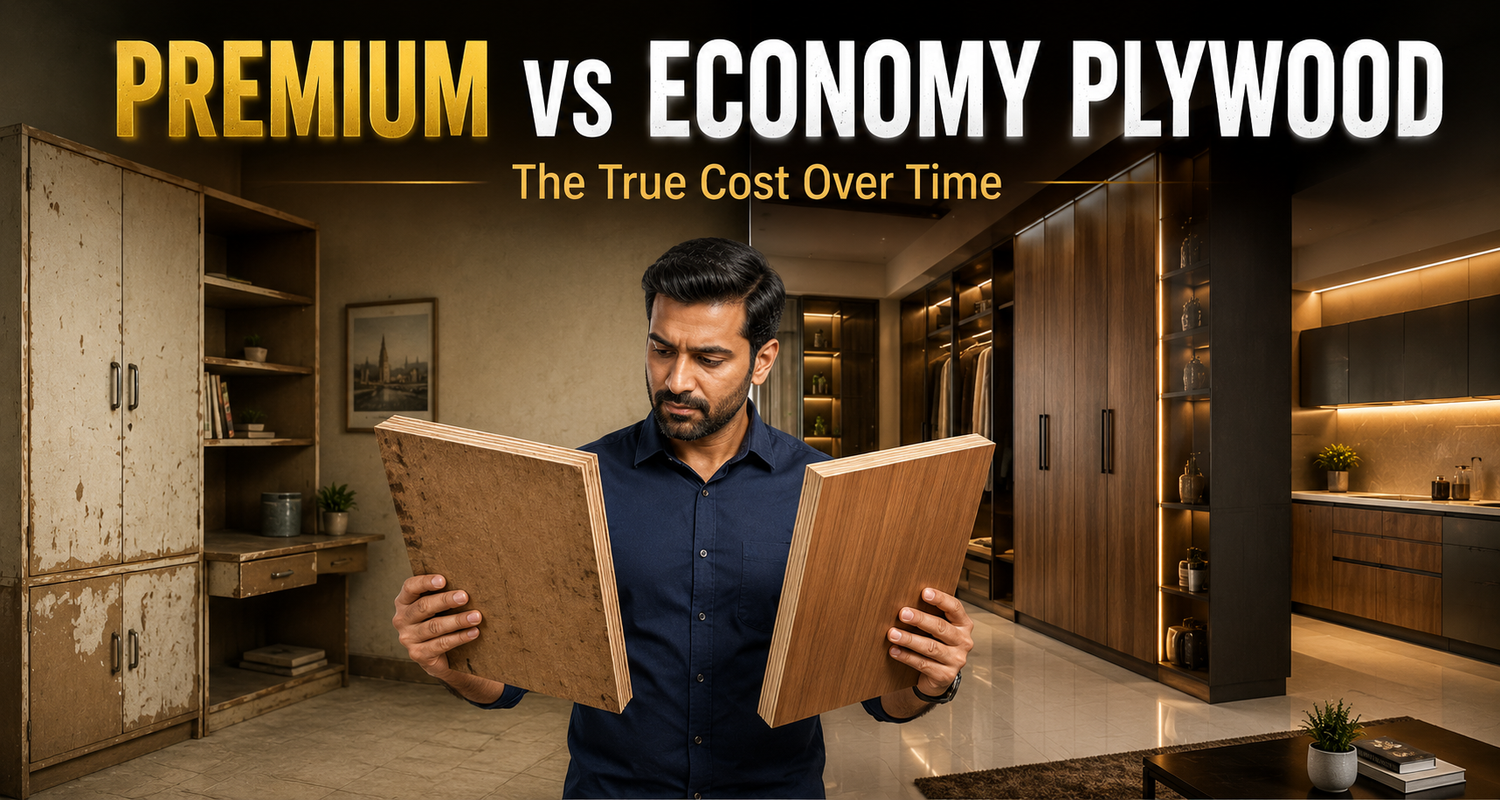
When planning a home, office, or commercial interior project, one of the most important decisions is selecting the right plywood. Most buyers compare prices first and naturally wonder whether premium plywood is worth the additional investment or if economy plywood can get the job done.
At first glance, economy plywood appears to be the smarter choice because of its lower purchase price. However, the real cost of plywood extends far beyond the initial invoice. Durability, moisture resistance, maintenance costs, replacement frequency, furniture lifespan, and warranty coverage all contribute to the overall value.
This raises an important question:
Is premium plywood actually more cost-effective in the long run?
In this comprehensive cost analysis, we'll compare premium and economy plywood, examine their performance differences, and calculate the true return on investment for homeowners, architects, contractors, and interior designers.
Understanding Plywood Categories
Plywood is available in multiple grades and price ranges.
Generally, it can be divided into two categories:
Premium Plywood
Premium plywood is manufactured using:
- Better-quality veneers
- Stronger adhesives
- Advanced pressing technology
- Higher-quality core construction
- Strict quality control
Examples include:
- BWP (Boiling Water Proof) plywood
- Marine plywood
- Fire-retardant plywood
- Premium calibrated plywood
Examples from Plyneer include:
- Plyneer Club
- Gold BWP
- Gold MR
- Plyneer X BWP
Economy Plywood
Economy plywood focuses on affordability.
These products are commonly used in:
- Budget projects
- Temporary installations
- Low-moisture environments
Examples include:
- Commercial MR plywood
- Entry-level furniture plywood
- Budget-grade plywood
Examples from Plyneer include:
- Silver MR
- Bullet MR
- Zarc Neem MR
Initial Cost Comparison
Let's compare approximate market pricing.
| Plywood Category | Approximate Cost (18mm, 8x4 Sheet) |
|---|---|
| Economy MR Plywood | Lower Cost |
| Standard MR Plywood | Moderate Cost |
| Premium MR Plywood | Higher Cost |
| BWP Plywood | Premium Pricing |
| Fire-Retardant BWP | Highest Investment |
At the time of purchase, premium plywood may cost 20–60% more than economy alternatives.
This often discourages buyers.
However, initial price tells only part of the story.
The Hidden Cost of Economy Plywood
Many buyers focus solely on purchase price without considering future expenses.
Common issues with economy plywood include:
Moisture Damage
Economy plywood often has lower moisture resistance.
This can result in:
- Swelling
- Delamination
- Warping
- Surface damage
Especially in:
- Kitchens
- Bathrooms
- Utility areas
Frequent Repairs
Furniture made using low-grade plywood may require:
- Panel replacement
- Laminate repairs
- Rework by carpenters
Repair costs accumulate over time.
Reduced Furniture Lifespan
Furniture durability is directly linked to plywood quality.
Poor-quality plywood may show deterioration much sooner.
Termite and Borer Risks
Lower-grade plywood may offer less protection against biological attacks.
This increases maintenance costs.
Long-Term Cost Analysis
Let's assume two homeowners build identical wardrobes.
Scenario A – Economy Plywood
Initial Cost: ₹100,000
Potential Repairs Over 10 Years:
- Panel replacement
- Laminate repair
- Hardware adjustments
Estimated Additional Cost:
₹30,000–₹50,000
Total Cost:
₹130,000–₹150,000
Scenario B – Premium Plywood
Initial Cost: ₹130,000
Repairs:
Minimal
Estimated Additional Cost:
₹5,000–₹10,000
Total Cost:
₹135,000–₹140,000
Despite the higher purchase price, premium plywood often results in lower lifetime ownership costs.
Durability Comparison
| Feature | Economy Plywood | Premium Plywood |
|---|---|---|
| Lifespan | Moderate | Long |
| Moisture Resistance | Limited | Excellent |
| Structural Strength | Standard | Superior |
| Core Construction | Basic | Advanced |
| Surface Stability | Moderate | High |
| Maintenance Cost | Higher | Lower |
| Warranty Coverage | Limited | Extensive |
Performance in Different Applications
Modular Kitchens
Kitchens experience:
- Steam
- Heat
- Water exposure
Premium plywood performs significantly better.
Recommended:
- BWP plywood
- Fire-retardant plywood
Wardrobes
Wardrobes require:
- Structural stability
- Long-term durability
Premium MR plywood often provides better value.
TV Units
TV units contain:
- Wiring
- Heat-generating devices
Premium plywood helps improve safety and durability.
Commercial Interiors
Heavy usage demands stronger materials.
Premium plywood reduces maintenance and replacement costs.
Warranty Comparison
A major advantage of premium plywood is warranty coverage.
| Type | Typical Warranty |
|---|---|
| Economy Plywood | Limited |
| Premium MR Plywood | Extended |
| Premium BWP Plywood | Long-Term |
| Fire-Retardant Premium Plywood | Premium Coverage |
Longer warranties often indicate greater manufacturer confidence.
For example, several premium Plyneer products offer warranties ranging from 20 years to lifetime coverage depending on the product category.
Moisture Resistance and Cost Savings
Water damage is one of the most common causes of furniture failure.
Premium plywood offers:
- Better bonding
- Superior waterproofing
- Reduced swelling
- Longer furniture life
For kitchens and bathrooms, moisture resistance alone can justify the additional investment.
Fire Safety Considerations
Fire damage can significantly increase replacement costs.
Premium fire-retardant plywood helps:
- Slow flame spread
- Delay ignition
- Improve safety
For high-risk areas such as modular kitchens and commercial projects, fire-retardant plywood may provide substantial long-term value.
When Economy Plywood Makes Sense
Economy plywood is not always a bad choice.
It can be suitable for:
Temporary Furniture
Short-term usage projects.
Rental Properties
Budget-focused installations.
Dry Areas
Low-moisture environments.
Non-Critical Applications
Storage units or utility furniture.
If budget is the primary concern, economy plywood can still provide acceptable performance when used appropriately.
When Premium Plywood Is Worth the Investment
Premium plywood is usually the better choice when:
- Building a permanent home
- Designing luxury interiors
- Installing modular kitchens
- Creating wardrobes
- Seeking long-term durability
- Reducing maintenance costs
- Improving fire safety
- Maximizing furniture lifespan
Cost Per Year Analysis
Instead of comparing purchase price, compare annual ownership cost.
Economy Plywood
Cost: ₹100,000
Expected Life: 10 Years
Annual Cost:
₹10,000 per year
Premium Plywood
Cost: ₹130,000
Expected Life: 20 Years
Annual Cost:
₹6,500 per year
This simple calculation shows why premium plywood often delivers better value.
Premium vs Economy Plywood: Quick Comparison
| Factor | Economy Plywood | Premium Plywood |
|---|---|---|
| Initial Cost | Lower | Higher |
| Lifespan | Shorter | Longer |
| Maintenance | Higher | Lower |
| Moisture Resistance | Basic | Excellent |
| Fire Resistance | Limited | Available |
| Warranty | Short | Extended |
| Long-Term Value | Moderate | Excellent |
Key Takeaways
- Economy plywood offers lower upfront cost.
- Premium plywood provides better durability and lifespan.
- Moisture resistance significantly impacts long-term value.
- Repair and replacement costs often make economy plywood more expensive over time.
- Fire-retardant plywood adds an extra layer of safety.
- Premium plywood generally offers a better return on investment.
- Cost per year is often lower for premium plywood.
- Long-term projects benefit most from premium-grade products.
Conclusion
The debate between premium and economy plywood should not be based solely on purchase price. While economy plywood may appear attractive because of its lower upfront cost, premium plywood often delivers superior long-term value through greater durability, reduced maintenance, enhanced moisture resistance, and longer service life.
For homeowners building a permanent residence, architects designing premium interiors, and contractors seeking lasting performance, premium plywood is often the more economical choice over the life of the furniture.
The best plywood is not necessarily the cheapest sheet you buy today—it is the one that continues performing reliably for decades.


