

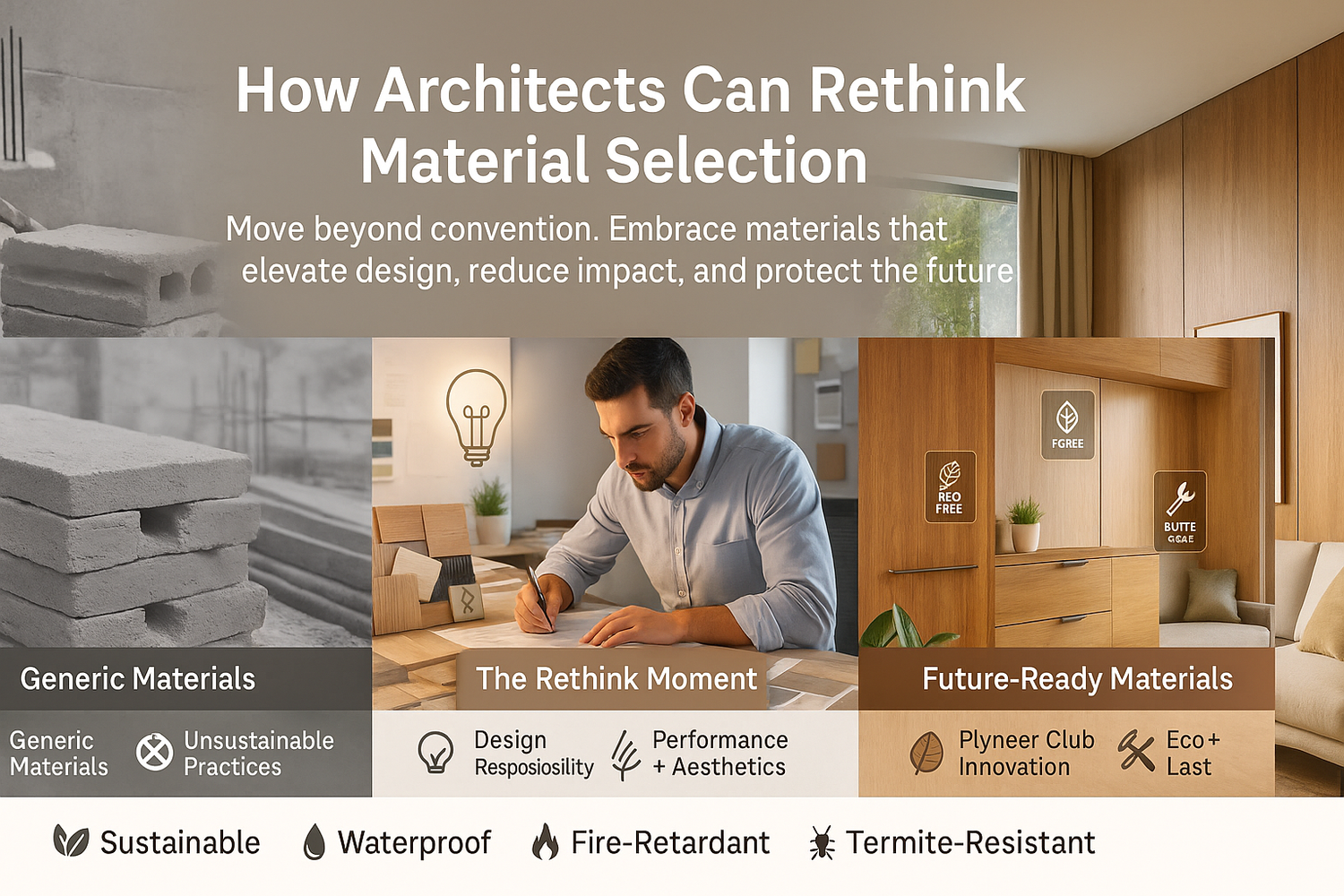
Modern architecture isn't just about how a space looks — it's about how it performs, lasts, and impacts the environment. As material science evolves, architects are uniquely positioned to lead a smarter, more conscious design movement by rethinking material selection.
1. Prioritize Performance-Driven Materials
Gone are the days when materials were chosen based solely on aesthetics. Today’s ideal materials must deliver multi-dimensional performance — combining fire resistance, water protection, strength, and aesthetics in one.
Example:
Plyneer Club plywood is a fire-retardant, waterproof, ISI:710-certified board with a lifetime warranty. For architects, that means:
- Fewer callbacks.
- Enhanced building safety.
- Strong brand trust.
2. Factor in Sustainability from the Start
Sustainability isn’t a feature; it’s a responsibility. Architects must consider:
- Sourcing (Is it FSC certified? Is it plantation timber?)
- VOC emissions (Is it E1/E0 formaldehyde compliant?)
- Lifecycle (Does it last 20+ years without replacement?)
Rethink Tip: Opt for boards like Plyneer Club that are made with eco-safe resins and offer termite protection — reducing replacements and waste.
3. Switch to Multi-Use Materials
Modular design is the future. Choose materials that can flow across rooms and applications — from kitchens and bathrooms to wardrobes and wall cladding.
One high-performance material that works across:
- Bedrooms
- Kitchens
- Partitions
- Ceilings
- Commercial spaces
...helps architects design seamless, cost-efficient, and faster-to-build spaces.
4. Integrate Local Climate Considerations
Indian homes face:
- 🔥 Heat
- 🌧️ Humidity
- 🐜 Termite-prone regions
- 🚿 Water-heavy areas like bathrooms and kitchens
- Choosing the wrong ply can cause warping, delamination, and failure. That’s why ISI:710 BWP or fire-retardant plywoods like Plyneer Club are ideal — they’re climate-resistant by design.
5. Look Beyond Trends — Choose Timeless Materials
Trendy finishes may change, but the base material remains. Build on a strong, reliable substrate so any design trend — whether fluted panels, duco, PU, or laminates — sits confidently.


