

Introduction
Bangalore is known for its moderate climate, cool evenings, and pleasant weather throughout most of the year. However, despite being less humid than coastal cities like Chennai or Mumbai, Bangalore's seasonal rains, moisture fluctuations, and occasional water seepage can gradually affect furniture and interior materials.
Many homeowners invest significantly in modular kitchens, wardrobes, TV units, study tables, and custom furniture but often overlook one critical factor—the quality of materials used inside the furniture.
Furniture problems rarely appear immediately after installation. Instead, they develop slowly over time, often becoming visible only after a few monsoon seasons.
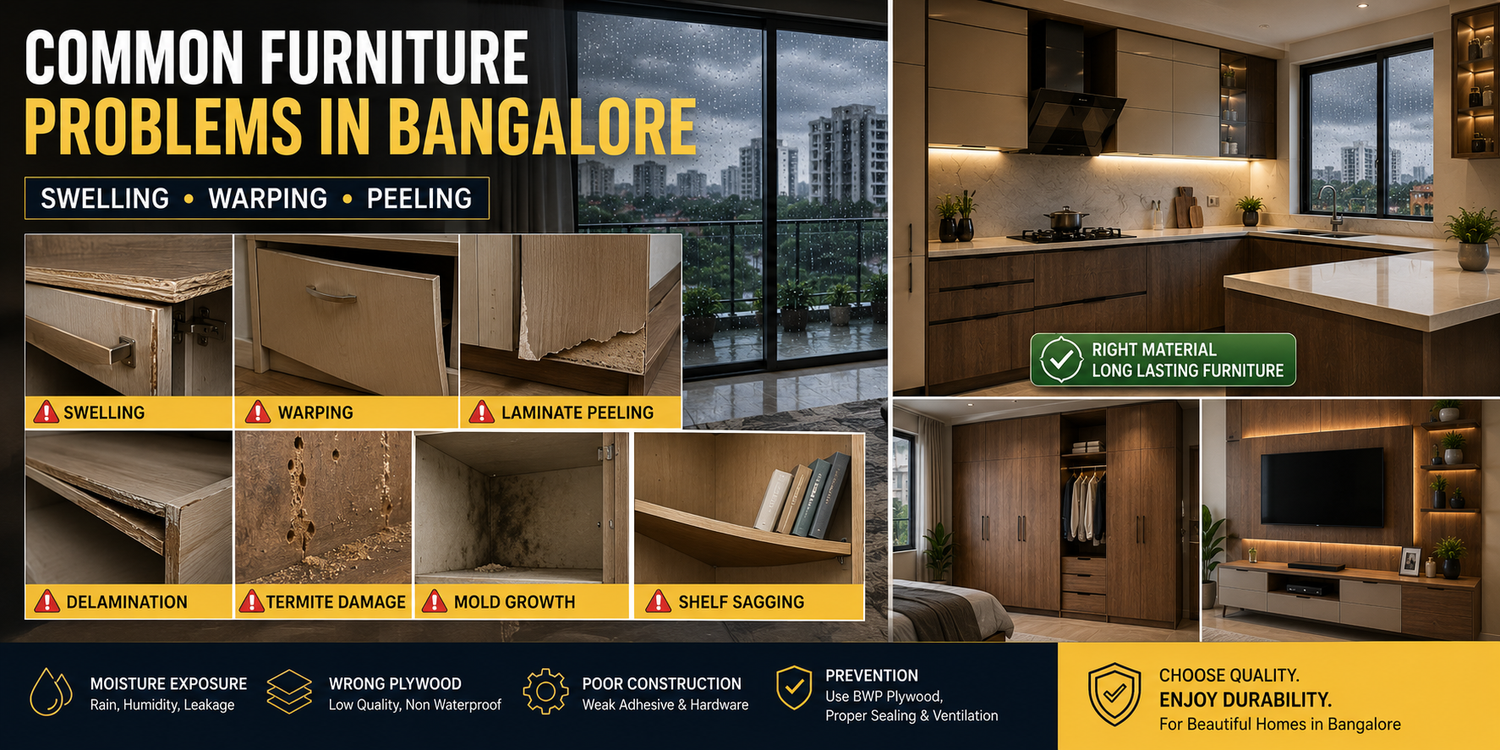
Issues such as swelling, warping, laminate peeling, termite attacks, and structural weakness are common in homes where low-quality plywood or improper construction methods have been used.
In this guide, we'll explore the most common furniture problems in Bangalore and how homeowners can prevent them.
Why Furniture Gets Damaged in Bangalore
Several environmental and usage-related factors contribute to furniture deterioration.
Seasonal Humidity Changes
Humidity levels increase during monsoon seasons and decrease during dry periods.
This constant expansion and contraction can stress furniture materials.
Moisture Exposure
Sources include:
- Kitchen steam
- Bathroom humidity
- Water leakage
- Window condensation
- Wet cleaning practices
Poor Material Selection
Using the wrong plywood grade often leads to premature furniture failure.
Inadequate Ventilation
Poor airflow can trap moisture around furniture.
Swelling of Cabinets and Panels
One of the most common furniture problems in Bangalore is swelling.
Why It Happens
Moisture enters the plywood core through:
- Unsealed edges
- Damaged laminates
- Water exposure
- Poor-quality plywood
Common Signs
- Expanded edges
- Raised surfaces
- Tight-fitting shutters
- Misaligned panels
Areas Most Affected
- Modular kitchens
- Sink cabinets
- Utility units
- Bathroom furniture
Prevention
✔ Use BWP plywood
✔ Seal exposed edges
✔ Avoid prolonged water exposure
Warping of Doors and Shutters
Warping occurs when furniture panels lose their original shape.
Causes
- Moisture imbalance
- Low-quality plywood
- Thin panel construction
- Improper storage before installation
Common Examples
- Curved wardrobe shutters
- Twisted cabinet doors
- Uneven shelves
Prevention
✔ Use premium plywood
✔ Ensure proper fabrication
✔ Maintain adequate ventilation
Laminate Peeling and Bubble Formation
Laminates are designed to protect furniture surfaces.
However, moisture and poor bonding can cause them to separate.
Causes
- Inferior adhesive
- Excess moisture
- Poor surface preparation
- Low-quality substrate
Warning Signs
- Edge lifting
- Surface bubbles
- Visible separation
Prevention
✔ Use calibrated plywood
✔ Choose quality adhesives
✔ Avoid excessive moisture exposure
Delamination of Plywood
Delamination refers to the separation of plywood layers.
Why It Happens
- Weak adhesive bonding
- Moisture penetration
- Low manufacturing quality
Effects
- Reduced strength
- Visible gaps
- Structural failure
Prevention
✔ Choose IS-certified plywood
✔ Use BWP or Marine plywood in moisture-prone areas
Termite and Borer Attacks
Although Bangalore is not a high-termite zone compared to some regions, termite infestations still occur.
Common Risk Areas
- Ground-floor homes
- Wooden storage units
- Poorly ventilated furniture
Signs of Infestation
- Small holes
- Powder-like residue
- Hollow sounds when tapped
Prevention
✔ Use treated plywood
✔ Maintain dry surroundings
✔ Conduct periodic inspections
Mold and Fungus Growth
Monsoon moisture can encourage mold development.
Common Locations
- Wardrobes
- Kitchen cabinets
- Storage rooms
- Utility furniture
Problems Caused
- Unpleasant odors
- Surface staining
- Reduced indoor air quality
Prevention
✔ Improve ventilation
✔ Control indoor humidity
✔ Use moisture-resistant materials
Sagging Shelves
Many homeowners notice shelves bending over time.
Causes
- Excessive load
- Thin plywood
- Poor-quality material
Common Areas
- Book shelves
- Kitchen storage
- Wardrobes
Prevention
✔ Use thicker plywood
✔ Ensure proper support spacing
✔ Choose high-density materials
Hardware Failure
Not all furniture problems originate from wood panels.
Common Issues
- Loose hinges
- Drawer channel failure
- Misaligned doors
Causes
- Weak screw-holding strength
- Poor-quality hardware
- Frequent use
Prevention
✔ Use premium plywood
✔ Invest in quality hardware
✔ Ensure professional installation
Water Damage Around Kitchens
The kitchen is one of the most challenging environments for furniture.
Sources of Damage
- Sink leaks
- Steam exposure
- Wet utensils
- Appliance condensation
Common Problems
- Swollen cabinets
- Peeling laminates
- Delamination
Prevention
✔ Use BWP plywood
✔ Install proper sealing
✔ Address leaks immediately
Why Material Quality Makes a Difference
Most furniture problems can be traced back to material selection.
Low-Quality Plywood
May result in:
- Faster swelling
- Reduced lifespan
- Structural weakness
Premium Plywood
Provides:
✔ Better moisture resistance
✔ Superior strength
✔ Longer furniture life
✔ Reduced maintenance costs
Best Plywood for Bangalore Homes
Modular Kitchens
Recommended:
- BWP Plywood
- Fire-Retardant BWP Plywood
Wardrobes
Recommended:
- Premium MR Plywood
- BWP Plywood
Utility Areas
Recommended:
- BWP Plywood
Premium Homes
Recommended:
- Marine Grade Plywood
Products such as Plyneer Club Fire-Retardant BWP Plywood are particularly suitable for Bangalore homes because they combine waterproof performance with enhanced fire safety.
Common Furniture Problems and Solutions
| Problem | Primary Cause | Recommended Solution |
|---|---|---|
| Swelling | Moisture Exposure | BWP Plywood |
| Warping | Poor Material Quality | Premium Plywood |
| Laminate Peeling | Moisture & Poor Bonding | Calibrated Plywood |
| Delamination | Weak Adhesives | IS-Certified Plywood |
| Termite Damage | Untreated Materials | Treated Plywood |
| Mold Growth | Humidity | Better Ventilation |
| Shelf Sagging | Weak Panels | Thicker Plywood |
| Water Damage | Leakage | Waterproof Plywood |


