

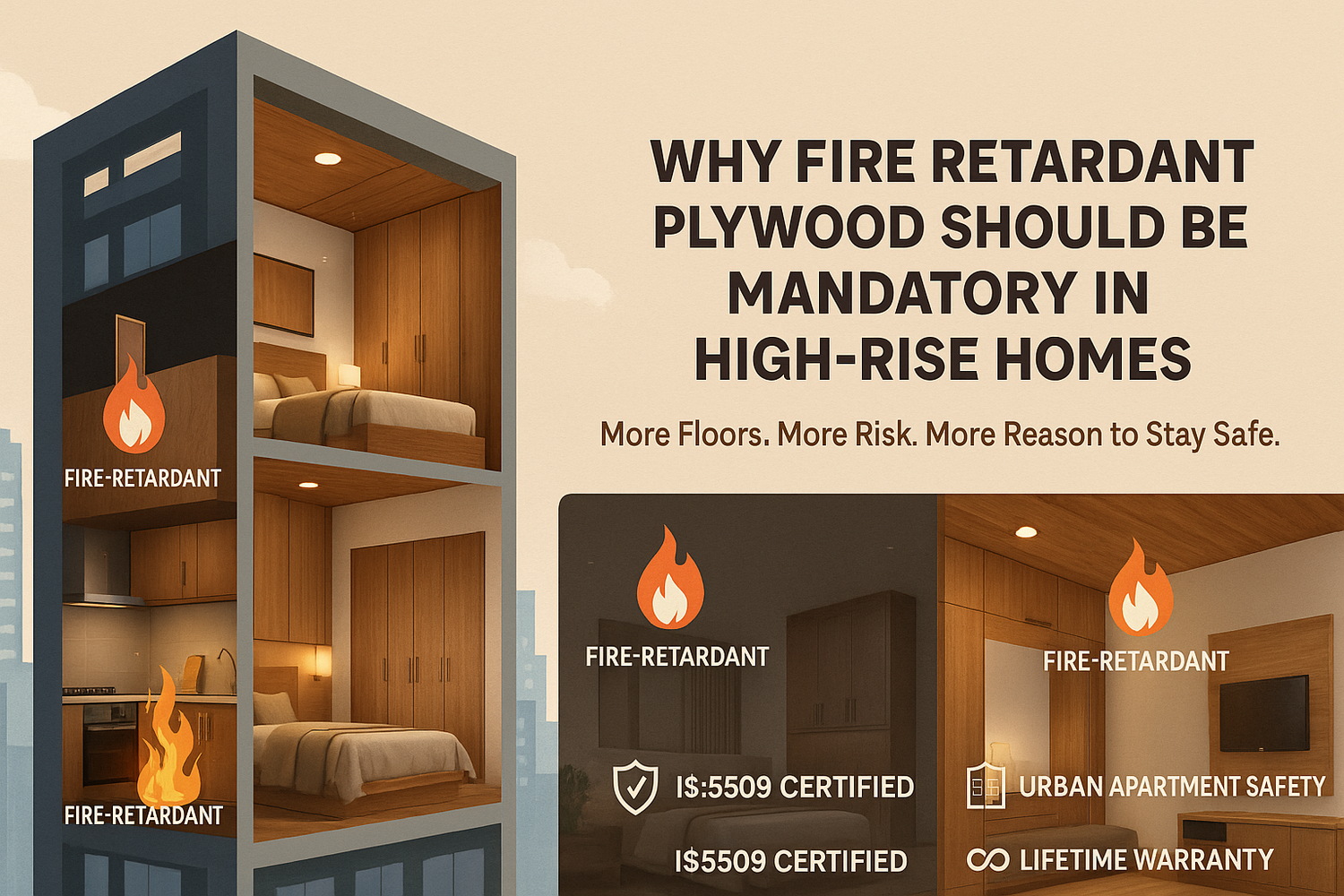
The Rise of High-Rises — And Fire Risks
In cities like Bengaluru, Mumbai, Hyderabad, and Delhi, high-rise apartments are now the norm. While these buildings offer better space utilization and views, they also pose greater fire hazards due to:
- Densely packed flats
- Vertical fire spread risk
- Limited escape routes
- Use of wooden interiors in kitchens, wardrobes, and ceilings
A small fire in one flat can quickly turn into a multi-floor emergency.
The Truth About Fire in High-Rise Homes
Fire spreads rapidly in tall buildings due to:
- Chimney effect in stairwells and shafts
- Shared walls and partitions made from flammable materials
- Poor-quality plywood in cabinets, panels, and doors
Regular plywood acts like fuel during a fire — it catches quickly, spreads flames fast, and releases toxic smoke.
Why Fire Retardant Plywood Should Be Mandatory
Fire-retardant plywood is treated with specific chemicals that:
- Delay ignition
- Reduce flame spread
- Emit less toxic smoke
- Give occupants more time to evacuate
In high-rises, this delay can save lives.
Imagine this scenario:
A short circuit in the kitchen causes a cabinet fire. Regular plywood ignites in under 2 minutes. But Plyneer Club — fire-retardant plywood — delays ignition by over 8 minutes. That’s the window your family needs to act.
National Fire Safety Regulations
1. IS:5509 (Fire-Retardant Plywood Standard)
Issued by the Bureau of Indian Standards, IS:5509 is the benchmark for fire-safe plywood used in construction and interiors.
2. NBC 2016 (National Building Code – Fire & Life Safety)
Mandates fire-retardant materials in:
- Staircase enclosures
- Kitchens and ducts
- Corridors and exit paths
- Electrical board enclosures
- High-rise buildings with 15m+ height
Using fire-retardant plywood like Plyneer Club is already a requirement in many building codes — but enforcement is often ignored.
Where to Use Fire-Retardant Plywood in High-Rise Homes
| Interior Element | Why Fire-Retardant Ply Is Needed |
|---|---|
| 🔥 Kitchen Cabinets | Gas, oil, flames = high risk zone |
| 🔌 TV Units + Panels | Wires, gadgets = overheating risk |
| 🚪 Doors & Partitions | Fire spreads through wooden barriers |
| 🛏️ Wardrobes in Bedrooms | Hidden sockets & chargers |
| ☁️ False Ceilings | Fire moves fast through ceilings |
How Plyneer Club Keeps High-Rises Safer
| Feature | Plyneer Club (IS:5509) Certified |
|---|---|
| Ignition Delay Time | ✅ Over 8 minutes |
| Flame Penetration Resistance | ✅ Yes |
| Smoke Density Control | ✅ Reduced toxic emissions |
| Surface Char Protection | ✅ Slows flame spread |
| Certification | ✅ IS:5509 + IS:710 |
What If Fire-Resistant Materials Were Mandated?
Let’s look at the benefits:
✅ Safer Escape Time
More time for evacuation = fewer casualties.
✅ Less Structural Damage
Fire spread is minimized to fewer floors.
✅ Lower Insurance Claims
Homes built with FR plywood have stronger defense and recovery ratings.
✅ Higher Builder Credibility
Builders who use FR-certified materials (like Plyneer Club) can promote fire-safe homes and charge premium pricing.
Real Testimonial from a High-Rise Owner
“After the fire incident in our tower last year, we redid our entire kitchen with Plyneer Club. It gives me peace of mind — especially with kids at home.”
— Mrs. Anjali Rao, 14th Floor, Bengaluru
Builders & Architects: Make Fire-Retardant Plywood Your Baseline
Don’t wait for regulations to catch up.
Using Plyneer Club fire-retardant plywood in your next apartment project:
- ✅ Protects lives
- ✅ Meets compliance
- ✅ Adds value to your brand
Final Takeaway: A High-Rise Must Have High-Grade Protection
Your home in the sky deserves protection at the ground level.
Choose Plyneer Club — IS:5509 certified fire-retardant plywood, made to stand strong in real-world high-rise conditions.
🔥 One board. Total peace of mind.


